Palmer Memorial Episcopal Church, Houston, Texas
The Reverend Neil Alan Willard, M.Div.
Proper 9, July 7, 2024
Jesus, the Morning Star, shine in the heavens above
and in our hearts below, now and always. Amen.
A good friend of mine from high school, who died a couple of years ago, was a Baptist minister, but not the kind you’re imagining at this very moment. At some point he exchanged his suits and ties for overalls and a beard that made him look like an Old Testament prophet. A motorcycle took him away from the City of Atlanta, back home to North Carolina. There he spent a lot of time hanging out at the Waffle House, talking to people about their lives.
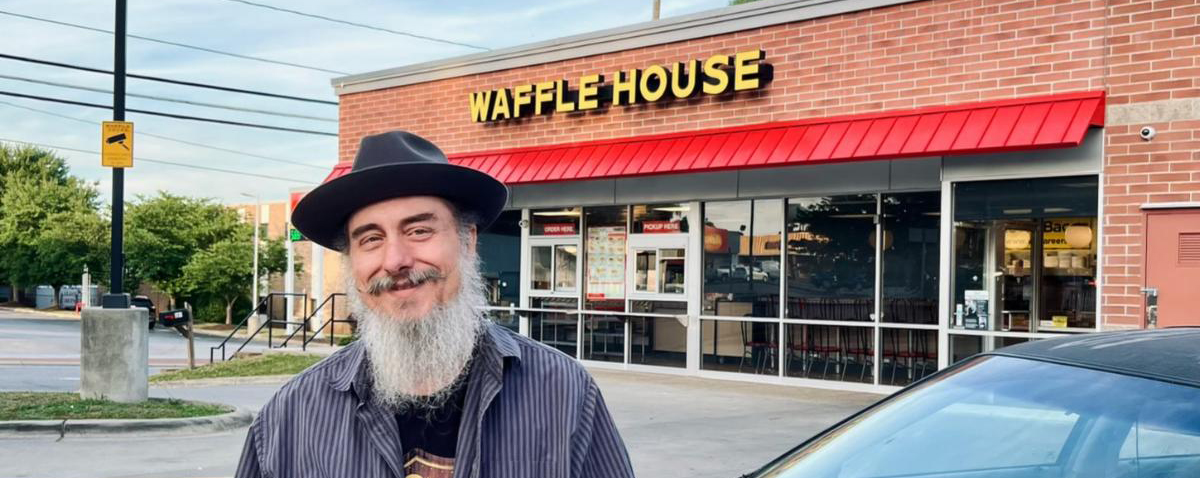
I don’t know if there was any kind of mystical experience that led to that transformation, which was pretty radical. But I do know how my friend, named Don Durham, described himself, at least sometimes. He said:
I’m just “a guy.” Like when you hear folks say, “I can’t help you with that, but . . . I know a guy.”1
That’s how Paul, a devout Jewish pharisee who became a devout Jewish follower of Jesus, begins today’s reading from his second letter to the Corinthians.2 He essentially says something like this: “I know a guy . . . a person who fourteen years ago was caught up to the third heaven. I don’t know if this came to him in a vision or if he was actually taken there. Only God knows that. But I do know this guy. He got a glimpse of paradise, of this third heaven, and in the midst of that, he heard things that are not to be told, that aren’t allowed to be repeated to anyone else.”
In this case, when Paul says, “I know a guy,” he’s probably talking about himself. He’s been talking about himself since the last chapter of this letter, in what’s often called “The Fool’s Speech.” Paul is here defending himself against opponents — those whom he refers to as so-called “super-apostles.”3 Think of them as slick, smiling, telegenic pastors of megachurches. They look better than Paul. They’re better public speakers than he is. They go around boasting about their spiritual gifts. So Paul asks the Corinthian Christians, for whom he feels “a divine jealousy,” to bear with him “in a little foolishness . . . so that [he] too may boast a little.”4
Part of Paul’s boasting is that he’s a better minister of the Christ, the Messiah, than these “super-apostles.” That’s because he’s suffered greatly in his ministry, both physically and “because of [his] anxiety for all the churches.”5 What the world sees revealed on the other side of these sufferings is a weak man. But Paul says he will boast of this weakness.
Although Paul doesn’t repeat what was heard in his mystical experience of paradise, he does share with the Corinthians, and with us, something he believes he heard in prayer. Paul believes that Jesus said to him, “My grace is sufficient for you, for power is made perfect in weakness.”6 So that’s why Paul says he gladly boasts of his own weaknesses.
But what are we to make of the mystical experience that Paul described earlier? It’s not the most important part of this speech by a fool for Christ. But he says it really happened to him. So what are we to make of it? Have you ever experienced something similar to this — something transcendent that was difficult or perhaps impossible to put into words?
The New Testament scholar Dale Allison, who teaches at Princeton Theological Seminary, has a theory that makes sense to me. He wonders if some people are thinner than others — not in physical appearance but with respect to the ability to have what we might describe as encounters with mystery.7 He knows some people have hallucinations and others don’t tell the truth, or the whole truth, about one thing or another. But he also knows that in this world where weird things happen some do have encounters with mystery that utterly change their lives because he had one of them.
When he was sixteen years old, Allison was sitting by himself “under the Kansas night sky” on the back porch of his family’s home. Suddenly it was as if the stars had “forsaken the firmament” and come down to surround him. He says they were neither really animate nor entirely inanimate. He also says they somehow made known to him the overwhelming presence of something that was “forbidding yet benevolent, affectionate yet enigmatic.” You can sense that he has trouble describing this with words, and whatever happened only lasted for about 20 seconds.8
But with great clarity he says that it awakened him from what he called “a lifelong slumber.” Immediately afterwards, he says that “[he] believed that [he] had run into God, or that God had run into [him].” It’s what ultimately caused him to become a biblical scholar, with all of his many doubts, questions, and curiosities about the scriptures and about the universe. It was not, he asserts, “something about which [he] could be indifferent.”9
I believe Allison’s story, even though I’ve never had an experience that intense. Perhaps he’s just thinner than I am, to use his language. But there are people close to me who’ve had dreams that approach this kind of encounter with the holy, and I believe them too.
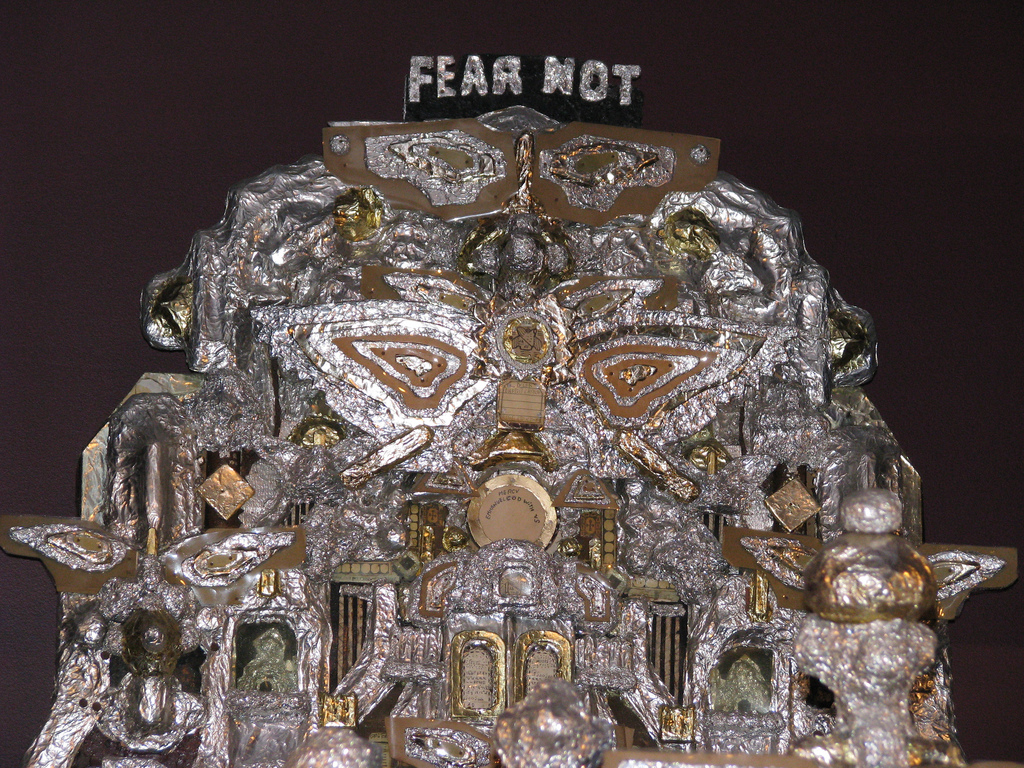
The closest I’ve ever come to a mystical experience was an overwhelming feeling at the Abby Aldrich Rockefeller Folk Art Museum in Williamsburg, Virginia. There, by myself, I stumbled upon a dark room with black walls and some benches that were arranged not unlike pews. Bright lights were pointed at the front of the room, reflecting intensely off the silver and gold metallic foils of an exhibit on loan from the Smithsonian called “The Throne of the Third Heaven of the Nation’s Millennium General Assembly.”

It was an elaborate representation of heavenly glory that was created out of “metallic foils, paper, plastic, strips of metal cut from coffee cans, jelly jars, flower vases, cardboard, conduit, glue, tape, tacks, and pins.”10 Silver and gold crowns rested on the floor in the front of everything else. At the center was a silver and gold wingèd throne beneath the words “Fear Not.”
James Hampton, a nighttime janitor, took 14 years to make it all, hidden in a rented brick garage until after his death.11 It was as if having climbed Jacob’s Ladder after Paul, he had also not been allowed to share what he had heard about hope and being set free at the return of Christ, whose throne this was.
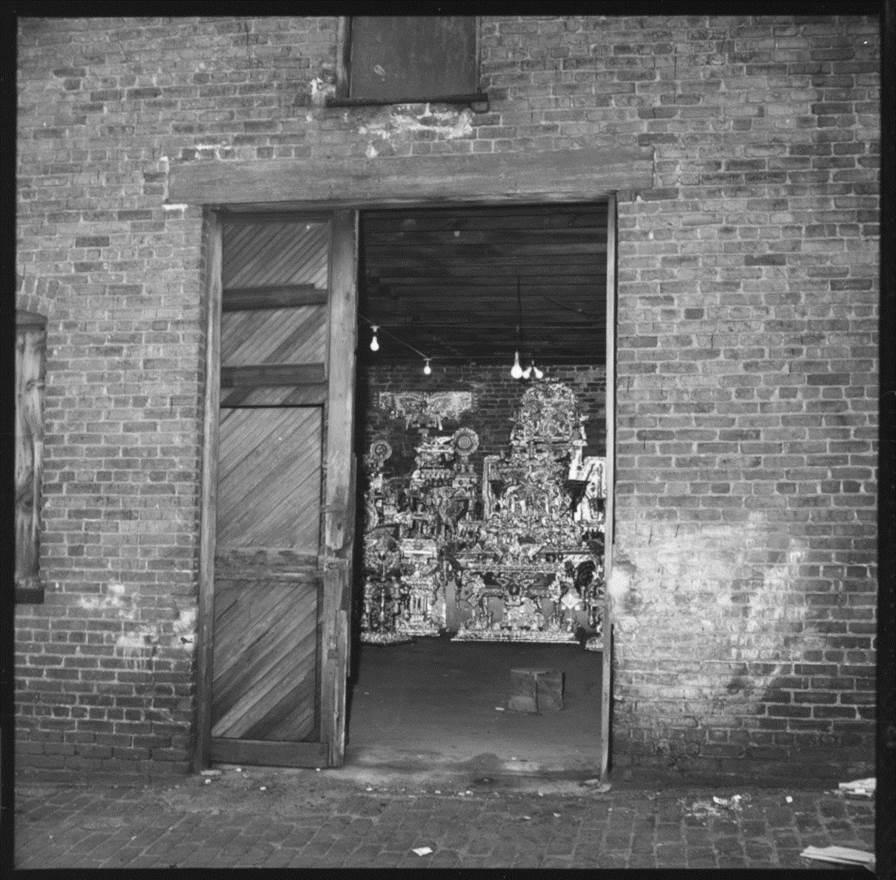
Much like those to whom the words “fear not” are spoken in the pages of the Bible, I was a little shaken as I sat there alone. Truly, the most mysterious part may have been the fact that no one else came into the room.
The “forbidding yet benevolent” feeling Dale Allison described about his own experience was present in that space of momentary solitude, which was simultaneously dark and brilliantly illuminated.
Thankfully, it didn’t end after 20 seconds; and I wanted to stay there as long as I could because, in spite of how crazy it seemed then and might seem now, I was experiencing a real sense of God’s holiness. I was rendered speechless, and yet I felt as though I was praying to God. Or perhaps it was the Holy Spirit praying for me with sighs too deep for words.12
That sense of awe is something we experience here in worship as we come before the mystery and the majesty of God, hearing that God’s love for each of us in the life, death, and resurrection of Jesus is always greater than our most unlovely moments and stronger than death.
But there’s something else that happens when we walk through these doors. It’s illustrated well in an essay by art historian Griffith Mann. He writes:
Several years ago, a museum professional told me about a chance meeting he once had at the National Gallery of Art in Washington, DC. A long-serving senator from Rhode Island was visiting the galleries alone. Recognizing him, [that professional] asked how he made time to visit the museum. The senator responded, “I come to the galleries to spend time with my [late] wife by looking at all the pictures that she loved.”13
I love that story, which reminds me of a favorite quote by the late Jaroslav Pelikan, who was the Sterling Professor Emeritus of History at Yale University. He famously wrote:
Tradition is the living faith of the dead,
traditionalism is the dead faith of the living.14
Each time I walk into this church, I think about that kind of living faith. I’m reminded me of all the people whose small acts of kindness have reflected God’s love for me in different chapters of my life. That includes parents and grandparents, teachers and friends and even strangers. It includes people from this congregation, some of whom are no longer with us in this life and who now see for themselves what that nighttime janitor imagined as heavenly beauty with silver and gold metallic foils.
I think he got absolutely right the words that crown the divine throne: “Fear Not.” That’s the message of consolation, compassion, and acceptance you should hear within these walls, even when there are plenty of things to fear beyond them. Here we put on the beautiful garments of forgiveness we’ve received through Jesus, who has taken away the sins of the whole world:
Thus well arrayed I need not fear
When in his presence I appear.15
Some people here this morning have had a mystical encounter of one kind or another. Many more have experienced the same wave of holiness I felt in front of the words “Fear Not” in a museum, alone yet not alone.
But none of those things matter if they only magnify our egos and create “super apostles” — people who brag about their spiritual gifts and, in the process, put down all those around them, whether here within God’s house or on the other side of these doors in the rest of God’s creation.
That’s not what Jesus did, and that’s not what the Holy Spirit, who makes present the love of Jesus today, does within and beyond these walls. That’s not what the Holy Spirit does within and beyond a human heart.
Everyone here this morning, regardless of how physically or spiritually weak you may feel, can participate in the small acts of kindness that reflect God’s love for you, for others, and for the world. These things that you speak or give or do have the power to change the world, beginning with the world that surrounds you. They may seem weak. They may seem insignificant. But the power of Christ dwells within you, as it did within Paul, which makes the love you share more important than any mystical vision, even “The Throne of the Third Heaven of the Nation’s Millennium General Assembly.”
I know a guy who saw that, all of it, in the body. The reality of the words “Fear Not” washed over him, but the most important part was the fact that he didn’t stay there. He walked away from that reflection of the third heaven with a heart overflowing with love to share, the same love that will stream out of the doors of this church as we’re sent into the world today.
AMEN
- This was Don Durham’s introduction on his Facebook page. ↩︎
- Second Corinthians 12:2-10. ↩︎
- Second Corinthians 11:5; 12:11. ↩︎
- Second Corinthians 11:1, 16. ↩︎
- Second Corinthians 11:28. ↩︎
- Second Corinthians 12:9. ↩︎
- Dale Allison has used this metaphor in many interviews related to his book Encountering Mystery: Religious Experience in a Secular Age (Grand Rapids: Eerdmans, 2022). ↩︎
- Dale Allison, Encountering Mystery: Religious Experience in a Secular Age (Grand Rapids: Eerdmans, 2022) 1-3, 6-7. ↩︎
- Dale Allison, Encountering Mystery: Religious Experience in a Secular Age (Grand Rapids: Eerdmans, 2022) 2-3, 6. ↩︎
- “The Throne of the Third Heaven of the Nations’ Millennium General Assembly,” The Colonial Williamsburg Journal (Spring 2004). ↩︎
- Artist: James Hampton, Smithsonian American Art Museum website. ↩︎
- Romans 8:26. ↩︎
- C. Griffith Mann, Encounter: The San Leonardo al Frigido Portal at The Cloisters,” Gesta, Volume 53, Issue 1 (Spring 2014) 1. ↩︎
- Jaroslav Pelikan, The Vindication of Tradition (New Haven: Yale University Press, 1984) 65. ↩︎
- This is a translation of words written in German by Nicholas Ludwig von Zinzendorf (1700-1760) as part of a Moravian chorale verse.
↩︎
 Tumbleweed Almanac