Rahab, Red Strings, and Rice Owls

Palmer Memorial Episcopal Church, Houston, Texas
The Reverend Neil Alan Willard, M.Div.
Proper 15, August 17, 2025

Jesus, Savior, may I know your love and make it known. Amen.

I’ve described in the past a few things about the church in North Carolina where I was baptized. It sits on more land than Palmer does, bordered in the 1970s and 1980s by two large tobacco fields. On the other two sides are roads that form a crossroads, hence the name Union Cross Moravian Church.

So there was a lot of grass to mow, which was always done by volunteers from the congregation. Daddy and I would take our turn in that work rotation, which included cutting the grass throughout God’s Acre. God’s Acre is the name that Moravian Christians use for the church cemetery, traditionally laid out in a grid pattern, with sidewalks around large squares filled with graves, each one with an equal, recumbent, white marble headstone.

My great-grandparents are buried there, so I remember seeing their simple headstones as I walked around them with the push mower. I also remember seeing another headstone in one of the first rows of graves, which had a rare-for-that-cemetery Masonic symbol at the top of it, just above the name of J. L. Johnson.1 He had donated the land for the church in the 1890s and died in 1900. And that’s most of what I knew about him for most of my life.

Headstones for my great-grandfather Charlie Tucker and for J. L. Johnson

I had never heard the amazing stories about Dr. John Lewis Johnson from my father because I’m pretty sure he’d never heard them from his father. Although my granddaddy was born in 1894 and surely met Dr. Johnson at some point as a small child because they lived close to one another, somewhere along the way, people just stopped talking about what had really happened in the past.2 Those memories were buried in the ground, totally forgotten at some point.

During the War of the Rebellion, there was an inner-civil war taking place not only in the mountains of North Carolina, but also in the Piedmont region, where I grew up. And Dr. Johnson was both a founder and leader of a secret society of Unionists called the Heroes of America.3

Testimony about the Red Strings before the Southern Claims Commission on June 18, 1872, in the City of High Point, Guilford County, North Carolina

They protected and stayed connected to each other’s families. They helped young men avoid the Confederate draft, hide from the Home Guard, or make their way to the Federal lines in Tennessee. Less than two years after the end of the Rebellion, Dr. Johnson helped to draft a number of resolutions endorsed by a large gathering of loyal citizens in the Union Cross community. They expressed their love for the American flag as a “proud emblem of freedom,” embraced congressional reconstruction, advocated for political cooperation between formerly enslaved Blacks and loyal whites, and said that:

. . . we wish to see the freedmen protected in their rights of franchise, knowing that they will not raise their arms against the just power that tore from their hands the galling shackles of slavery.4

Now I’m telling you all of this for two reasons. The first is because the Heroes of America also went by a nickname — the Red Strings — which comes from a story in the Book of Joshua in which a scarlet cord was used as a secret sign to protect a woman and her household in Jericho after she helped two spies on a reconnaissance mission escape by lowering them down the city wall with a red rope.5 That woman in the Old Testament was named Rahab, and she’s listed in the roll call of faith in the New Testament’s Letter to the Hebrews.6

That roll call of faith is much longer than the partial list in the passage read a few minutes ago, which included Rahab’s name.7 But she and everyone else on that list in Hebrews stepped out into the world in faith, helping to shape the world around them in ways which reflected divine salvation or health or wholeness. Although they didn’t see the end result, they’ve been part of what God is doing in the world, just as we’re part of what God’s doing in the world.

Even though you may not see the end result of what God is doing, what God is really and truly doing through your life, you are surrounded by a “great cloud of witnesses,” as the Letter to the Hebrews puts it.8 In that crowd is Rahab, with everyone else from the pages of the Bible in the roll call of faith.

In that crowd are also people known to you from your family of birth or your family of choice. In that crowd are people whom you came to know because you were curious about the past — people who stepped out in faith during the Civil Rights Movement, during Reconstruction, during the Reformation — people who stepped out in faith by unlocking the doors as the first disciples did in the Upper Room after they had seen Jesus on the other side of death and chose to keep looking for Jesus.9 In spite of fear, they walked out those doors.

The author of Hebrews imagines us running in a stadium, with all of those people in the stands cheering us on. While keeping our eyes fixed on Jesus, we can hear the roar of that crowd as we run the race — a roar which, like the love of Jesus, is for us, not against us. We’re not alone down here on the race track.

You don’t even have to imagine that roar since you heard screams and cheers from across the street this morning as you walked through the doors of the church. New students — new Owls — are being welcomed, loudly, to the campus of Rice University. The message is that each of them belongs there, just as each of you belong at the center of the action in the stadium of faith.

But here’s the other thing, the other reason why I wanted to share with you those stories about Dr. Johnson. When people stop telling stories from one generation to another, when people stop remembering things as they really were, what had once seemed important not only diminishes but can evaporate into thin air as if it had never existed. That’s true not only for our historical memory but also for our theological memory, our Christian faith and life.

If you saw the sci-fi movie Interstellar about a dystopian future for the whole planet, you may recall Matthew McConaughey, in the role of a widowed former NASA test pilot, going to a meeting at school which included his young daughter and her teacher. The daughter had brought to the classroom an old textbook showing the Apollo missions had not been faked. But that contradicted the stories being told to future generations. Watching that scene, you see how folks are living in an alternate reality, shaped for them by others.

Christians are not born, they are made, reborn in each generation. But they will not automatically appear in future generations if we stop paying attention to that, if we think that someone else will tell our children, our friends, our neighbors, our guests within these walls the stories of faith that have led us to the present moment, if we think that others will remember the Christian past on our behalf while we choose to remember something else, perhaps how we have succeeded on our own, how we were not dependent on God’s grace.

If that is what is most important to us, something separate from Christian community, that will become most important to those who come after us. And then we will be shocked at how quickly faith starts to fade into nothingness.

Faith is something each of us can hold on to throughout the hard times, like the scarlet rope offered by Rahab — and make no mistake about it, there will be hard times, difficult chapters in our own lives and the world around us.
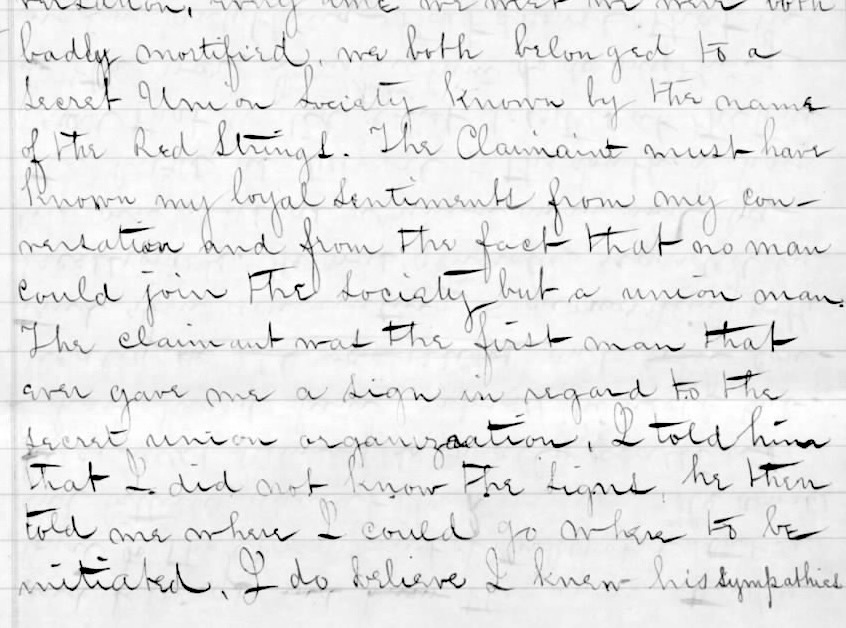
Testimony about the Red Strings before the Southern Claims Commission on June 6, 1872, in the City of High Point, Guilford County, North Carolina

I mentioned earlier that Dr. Johnson died in 1900, just long enough to see much of what he had worked for and hoped for slip away before his very eyes. The only successful coup d’état in the history of the United States took place in Wilmington, North Carolina, in 1898.10 It was the culmination of a white supremacist political campaign throughout the state that year, which included threats of violence and acts of violence to keep Black citizens from voting.

An armed white mob seized control of Wilmington, expelling Black politicians and others. Before sunset, they had forced the mayor, the board of aldermen, and the chief of police to resign. A week later, the publisher of the Chatham Record newspaper, Henry A. London, wrote these words in an editorial:

Wilmington is once more ruled by respectable white men and all her citizens are now safe and secure in their lives, liberty and property.11

Then, just three months and one day before Dr. Johnson’s death, white North Carolinians, having once again kept Black citizens away from the polls, voted to approve an amendment to the state constitution which would ensure the legal disenfranchisement of most Black voters throughout the Old North State.12 It would take decades for this to become undone, and Dr. Johnson, of course, didn’t live to see that undoing.

This is part of an editorial published in the Fayetteville Daily Observer on April 1, 1899. It later refers to “the revolution” in Wilmington that “hurled [the negroes] from power and drove their white allies into enforced exile.”

I can’t help but believe that Dr. Johnson kept his eyes on Jesus as he ran with perseverance through this life in the midst of turbulent times and that it affected deeply the way he looked at the rest of humanity — the way he looked at his neighbors, they way he looked at those with whom he worked closely, the way he looked at the individuals and families who lived in his community. He did not, in the words of the author of Hebrews, “receive what was promised.”13 But he was faithful to the end, his work was not in vain, and his hope, a Christian hope, for a better future for all of us wasn’t unfounded.

I believe he will awaken in the likeness of Jesus when the darkness of death is dispelled by resurrection light on the Last Day, and whatever stories of the past that are true but have been intentionally forgotten will be raised up as well and remembered. Whatever is true, lovely, and merciful is not lost to God. I also believe that our lives are just as important as his life was. So like him:

. . . let us also lay aside every weight and the sin that clings so closely, and let us run with perseverance the race that is set before us, looking to Jesus the pioneer and perfecter of our faith.14

Photograph of Dr. John Lewis Johnson from the State Archives of North Carolina

AMEN

  1. Moravian Christians are not buried in God’s Acre beside members of their immediate family. Men are buried next to one another in sequence, and women are buried next to one another in sequence, demonstrating in death not only equality through the uniform headstones but also the reality that they belong to the larger family of God, which is more important than their own family or their lack of a family. Although he died in 1900, it is surprising to see that Dr. John Lewis Johnson is buried next to but after my great-grandfather Charlie Tucker, who died in 1949. Dr. Johnson and his wife had first been buried elsewhere on part of his land that was not originally donated to the church but that later also became part of the church property. They were both reinterred in God’s Acre after it had been laid out at Union Cross in the 1940s. With that, Dr. Johnson and his wife both rejoined this larger family of God. ↩︎
  2. According to the 1900 federal census, Dr. Johnson, a widower at that point, was living with his son near the farm of my great-grandfather Jacob Williard. My grandfather Clifton Williard/Willard would have been six-years-old when Dr. Johnson died that fall on November 3, 1900. ↩︎
  3. William T. Auman and David D. Scarboro, “Johnson, John Lewis,” NCpedia website, 1988. One book about the larger context is Civil War in the North Carolina Quaker Belt: The Confederate Campaign Against Peace Agitators, Deserters and Draft Dodgers by William T. Auman. Another book about the larger context is Rebels Against the Confederacy: North Carolina’s Unionists by Barton A. Myers. ↩︎
  4. “Republican Meeting at Union Cross,” The Daily Standard (Raleigh, North Carolina), April 2, 1867, p. 3. ↩︎
  5. Joshua 2:1-21; 6:12-25. ↩︎
  6. Hebrews 11:1-39. ↩︎
  7. Hebrews 11:29-12:2. ↩︎
  8. Hebrews 12:1. ↩︎
  9. John 20:19-31. This passage describes how “the doors of the house where the disciples had met were locked” before they met Jesus, risen from the dead, for the first time on the evening of the same day that women had discovered his empty tomb. That empowered them to unlock the doors, cross the threshold in faith, and go into the world. ↩︎
  10. “1898 Wilmington Coup,” North Carolina Department of Natural and Cultural Resources website. There are many sources from which one can learn about this historical event, but I think the best book-length treatment is the Pulitzer Prize-winning Wilmington’s Lie: The Murderous Coup of 1898 and the Rise of White Supremacy by David Zucchino. Unfortunately, my public high school in Forsyth County, North Carolina, is named for Robert B. Glenn, one of the main orators for the white supremacist political campaign of 1898. Glenn was elected Governor of North Carolina in 1905 and, ironically, testified the following year in the trial of a white man accused of orchestrating the lynching of five Black men after Glenn had ordered state militia to try, unsuccessfully, to stop the murders. Glenn also took a hard line against all lynchings after the public outcry about this case. It’s an example of swinging wildly toward law and order only after violence and other illegal means had been used to establish white supremacy. Lynchings were also bad for business. ↩︎
  11. H.A. London, editorial, The Chatham Record (Pittsboro, North Carolina), November 17, 1898, p. 2. ↩︎
  12. “On this day — Aug 2, 1900, North Carolina Votes to Disenfranchise Black Residents,” A History of Racial Injustice website, The Equal Justice Initiative. Astonishingly, although nullified by the Voting Rights Act of 1965, the language requiring a literacy test to vote remains in the North Carolina State Constitution to this day despite attempts to remove it. ↩︎
  13. Hebrews 11:39. ↩︎
  14. Hebrews 12:1-2 (emphasis added). ↩︎
Speechless in the Third Heaven

Palmer Memorial Episcopal Church, Houston, Texas
The Reverend Neil Alan Willard, M.Div.
Proper 9, July 7, 2024

Jesus, the Morning Star, shine in the heavens above
and in our hearts below, now and always. Amen.

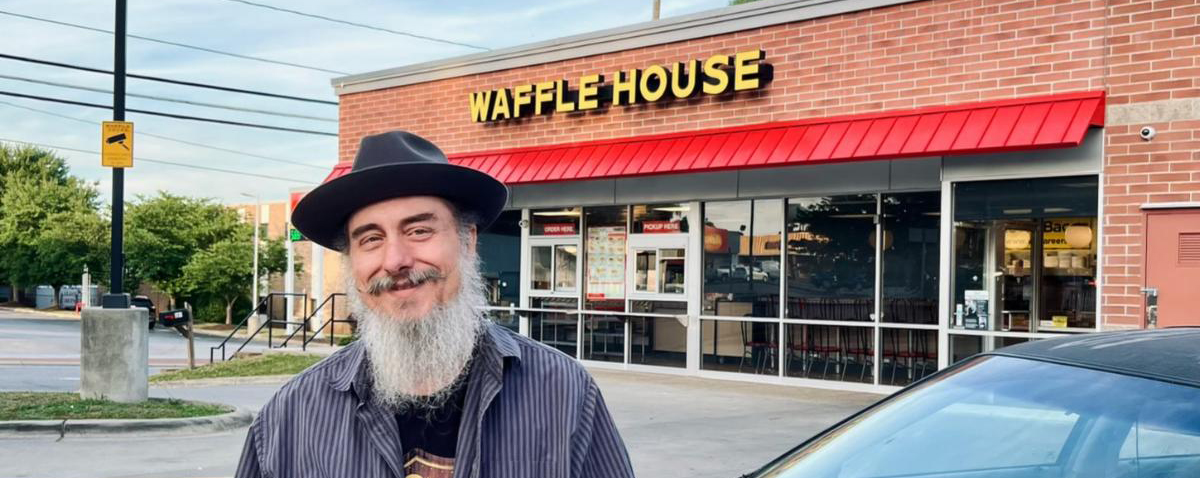
A good friend of mine from high school, who died a couple of years ago, was a Baptist minister, but not the kind you’re imagining at this very moment. At some point he exchanged his suits and ties for overalls and a beard that made him look like an Old Testament prophet. A motorcycle took him away from the City of Atlanta, back home to North Carolina. There he spent a lot of time hanging out at the Waffle House, talking to people about their lives.


I don’t know if there was any kind of mystical experience that led to that transformation, which was pretty radical. But I do know how my friend, named Don Durham, described himself, at least sometimes. He said:

I’m just “a guy.” Like when you hear folks say, “I can’t help you with that, but . . . I know a guy.”1

That’s how Paul, a devout Jewish pharisee who became a devout Jewish follower of Jesus, begins today’s reading from his second letter to the Corinthians.2 He essentially says something like this: “I know a guy . . . a person who fourteen years ago was caught up to the third heaven. I don’t know if this came to him in a vision or if he was actually taken there. Only God knows that. But I do know this guy. He got a glimpse of paradise, of this third heaven, and in the midst of that, he heard things that are not to be told, that aren’t allowed to be repeated to anyone else.”

In this case, when Paul says, “I know a guy,” he’s probably talking about himself. He’s been talking about himself since the last chapter of this letter, in what’s often called “The Fool’s Speech.” Paul is here defending himself against opponents — those whom he refers to as so-called “super-apostles.”3 Think of them as slick, smiling, telegenic pastors of megachurches. They look better than Paul. They’re better public speakers than he is. They go around boasting about their spiritual gifts. So Paul asks the Corinthian Christians, for whom he feels “a divine jealousy,” to bear with him “in a little foolishness . . . so that [he] too may boast a little.”4

Part of Paul’s boasting is that he’s a better minister of the Christ, the Messiah, than these “super-apostles.” That’s because he’s suffered greatly in his ministry, both physically and “because of [his] anxiety for all the churches.”5 What the world sees revealed on the other side of these sufferings is a weak man. But Paul says he will boast of this weakness.

Although Paul doesn’t repeat what was heard in his mystical experience of paradise, he does share with the Corinthians, and with us, something he believes he heard in prayer. Paul believes that Jesus said to him, “My grace is sufficient for you, for power is made perfect in weakness.”6 So that’s why Paul says he gladly boasts of his own weaknesses.

But what are we to make of the mystical experience that Paul described earlier? It’s not the most important part of this speech by a fool for Christ. But he says it really happened to him. So what are we to make of it? Have you ever experienced something similar to this — something transcendent that was difficult or perhaps impossible to put into words?

The New Testament scholar Dale Allison, who teaches at Princeton Theological Seminary, has a theory that makes sense to me. He wonders if some people are thinner than others — not in physical appearance but with respect to the ability to have what we might describe as encounters with mystery.7 He knows some people have hallucinations and others don’t tell the truth, or the whole truth, about one thing or another. But he also knows that in this world where weird things happen some do have encounters with mystery that utterly change their lives because he had one of them.

When he was sixteen years old, Allison was sitting by himself “under the Kansas night sky” on the back porch of his family’s home. Suddenly it was as if the stars had “forsaken the firmament” and come down to surround him. He says they were neither really animate nor entirely inanimate. He also says they somehow made known to him the overwhelming presence of something that was “forbidding yet benevolent, affectionate yet enigmatic.” You can sense that he has trouble describing this with words, and whatever happened only lasted for about 20 seconds.8

But with great clarity he says that it awakened him from what he called “a lifelong slumber.” Immediately afterwards, he says that “[he] believed that [he] had run into God, or that God had run into [him].” It’s what ultimately caused him to become a biblical scholar, with all of his many doubts, questions, and curiosities about the scriptures and about the universe. It was not, he asserts, “something about which [he] could be indifferent.”9

I believe Allison’s story, even though I’ve never had an experience that intense. Perhaps he’s just thinner than I am, to use his language. But there are people close to me who’ve had dreams that approach this kind of encounter with the holy, and I believe them too.

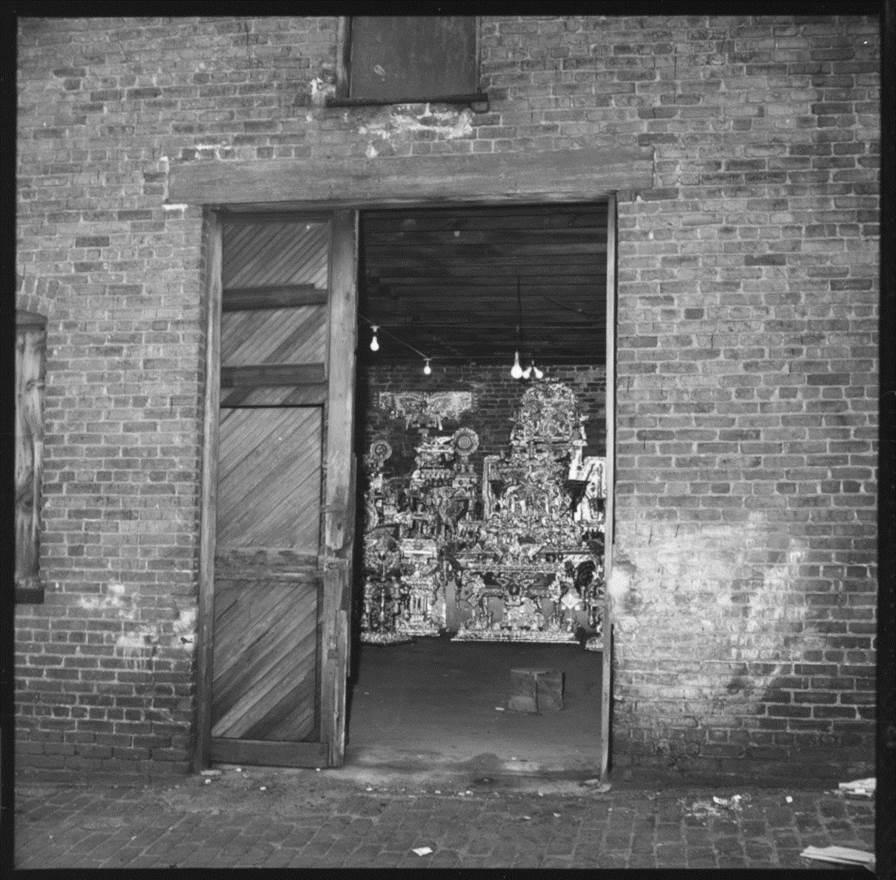
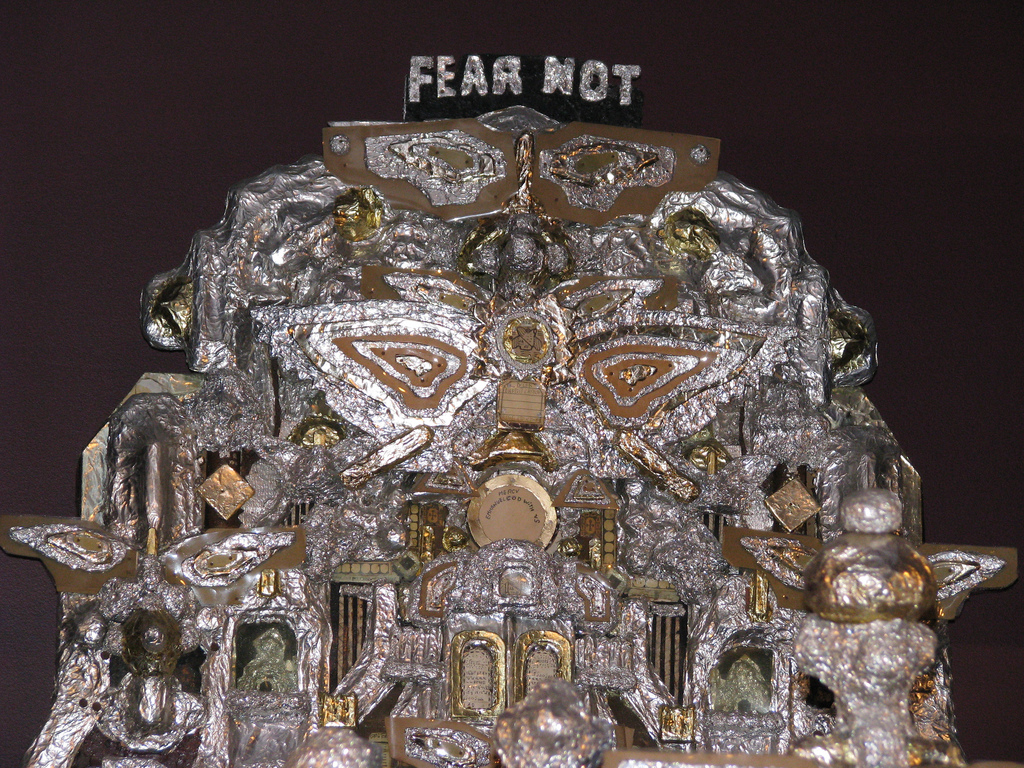
The closest I’ve ever come to a mystical experience was an overwhelming feeling at the Abby Aldrich Rockefeller Folk Art Museum in Williamsburg, Virginia. There, by myself, I stumbled upon a dark room with black walls and some benches that were arranged not unlike pews. Bright lights were pointed at the front of the room, reflecting intensely off the silver and gold metallic foils of an exhibit on loan from the Smithsonian called “The Throne of the Third Heaven of the Nation’s Millennium General Assembly.”


It was an elaborate representation of heavenly glory that was created out of “metallic foils, paper, plastic, strips of metal cut from coffee cans, jelly jars, flower vases, cardboard, conduit, glue, tape, tacks, and pins.”10 Silver and gold crowns rested on the floor in the front of everything else. At the center was a silver and gold wingèd throne beneath the words “Fear Not.”

James Hampton, a nighttime janitor, took 14 years to make it all, hidden in a rented brick garage until after his death.11 It was as if having climbed Jacob’s Ladder after Paul, he had also not been allowed to share what he had heard about hope and being set free at the return of Christ, whose throne this was.


Much like those to whom the words “fear not” are spoken in the pages of the Bible, I was a little shaken as I sat there alone. Truly, the most mysterious part may have been the fact that no one else came into the room.

The “forbidding yet benevolent” feeling Dale Allison described about his own experience was present in that space of momentary solitude, which was simultaneously dark and brilliantly illuminated.

Thankfully, it didn’t end after 20 seconds; and I wanted to stay there as long as I could because, in spite of how crazy it seemed then and might seem now, I was experiencing a real sense of God’s holiness. I was rendered speechless, and yet I felt as though I was praying to God. Or perhaps it was the Holy Spirit praying for me with sighs too deep for words.12

That sense of awe is something we experience here in worship as we come before the mystery and the majesty of God, hearing that God’s love for each of us in the life, death, and resurrection of Jesus is always greater than our most unlovely moments and stronger than death.

But there’s something else that happens when we walk through these doors. It’s illustrated well in an essay by art historian Griffith Mann. He writes:

Several years ago, a museum professional told me about a chance meeting he once had at the National Gallery of Art in Washington, DC. A long-serving senator from Rhode Island was visiting the galleries alone. Recognizing him, [that professional] asked how he made time to visit the museum. The senator responded, “I come to the galleries to spend time with my [late] wife by looking at all the pictures that she loved.”13

I love that story, which reminds me of a favorite quote by the late Jaroslav Pelikan, who was the Sterling Professor Emeritus of History at Yale University. He famously wrote:

Tradition is the living faith of the dead,
traditionalism is the dead faith of the living.14

Each time I walk into this church, I think about that kind of living faith. I’m reminded me of all the people whose small acts of kindness have reflected God’s love for me in different chapters of my life. That includes parents and grandparents, teachers and friends and even strangers. It includes people from this congregation, some of whom are no longer with us in this life and who now see for themselves what that nighttime janitor imagined as heavenly beauty with silver and gold metallic foils.

I think he got absolutely right the words that crown the divine throne: “Fear Not.” That’s the message of consolation, compassion, and acceptance you should hear within these walls, even when there are plenty of things to fear beyond them. Here we put on the beautiful garments of forgiveness we’ve received through Jesus, who has taken away the sins of the whole world:

Thus well arrayed I need not fear
When in his presence I appear.15

Some people here this morning have had a mystical encounter of one kind or another. Many more have experienced the same wave of holiness I felt in front of the words “Fear Not” in a museum, alone yet not alone.

But none of those things matter if they only magnify our egos and create “super apostles” — people who brag about their spiritual gifts and, in the process, put down all those around them, whether here within God’s house or on the other side of these doors in the rest of God’s creation.

That’s not what Jesus did, and that’s not what the Holy Spirit, who makes present the love of Jesus today, does within and beyond these walls. That’s not what the Holy Spirit does within and beyond a human heart.

Everyone here this morning, regardless of how physically or spiritually weak you may feel, can participate in the small acts of kindness that reflect God’s love for you, for others, and for the world. These things that you speak or give or do have the power to change the world, beginning with the world that surrounds you. They may seem weak. They may seem insignificant. But the power of Christ dwells within you, as it did within Paul, which makes the love you share more important than any mystical vision, even “The Throne of the Third Heaven of the Nation’s Millennium General Assembly.”

I know a guy who saw that, all of it, in the body. The reality of the words “Fear Not” washed over him, but the most important part was the fact that he didn’t stay there. He walked away from that reflection of the third heaven with a heart overflowing with love to share, the same love that will stream out of the doors of this church as we’re sent into the world today.


AMEN

  1. This was Don Durham’s introduction on his Facebook page. ↩︎
  2. Second Corinthians 12:2-10. ↩︎
  3. Second Corinthians 11:5; 12:11. ↩︎
  4. Second Corinthians 11:1, 16. ↩︎
  5. Second Corinthians 11:28. ↩︎
  6. Second Corinthians 12:9. ↩︎
  7. Dale Allison has used this metaphor in many interviews related to his book Encountering Mystery: Religious Experience in a Secular Age (Grand Rapids: Eerdmans, 2022). ↩︎
  8. Dale Allison, Encountering Mystery: Religious Experience in a Secular Age (Grand Rapids: Eerdmans, 2022) 1-3, 6-7. ↩︎
  9. Dale Allison, Encountering Mystery: Religious Experience in a Secular Age (Grand Rapids: Eerdmans, 2022) 2-3, 6. ↩︎
  10. “The Throne of the Third Heaven of the Nations’ Millennium General Assembly,” The Colonial Williamsburg Journal (Spring 2004). ↩︎
  11. Artist: James Hampton, Smithsonian American Art Museum website. ↩︎
  12. Romans 8:26. ↩︎
  13. C. Griffith Mann, Encounter: The San Leonardo al Frigido Portal at The Cloisters,” Gesta, Volume 53, Issue 1 (Spring 2014) 1. ↩︎
  14. Jaroslav Pelikan, The Vindication of Tradition (New Haven: Yale University Press, 1984) 65. ↩︎
  15. This is a translation of words written in German by Nicholas Ludwig von Zinzendorf (1700-1760) as part of a Moravian chorale verse.
    ↩︎

Life on the 400 Block of the Church

Palmer Memorial Episcopal Church, Houston, Texas
The Reverend Neil Alan Willard, M.Div.
Proper 5, June 6, 2021

Jesus, Savior, may I know your love and make it known. Amen.

Some of you will remember scenes from around the world last year when people in cities and towns either opened their windows or stepped out onto their balconies at the same time each evening. In Italy, they sang together to boost morale. In the City of Atlanta, they cheered loudly from high rises when healthcare workers were changing shifts to thank them for risking their own lives to save others. Here at Palmer, our church bells are still playing hymns in the morning and in the evening for those walking into and out of the largest medical complex in the world across the street from us.

But most of those communal gatherings that brought people outside of their homes and connected them with one another stopped long ago. Most, but not all. The folks who live in the 400 block of East 118th Street in New York City are still going at it more than 400 days after starting this ritual.[1]

Ivette Rodriguez never misses a night. She moved to that block with her mother back in 1965. Her husband sets an alarm to make sure they don’t forget. At 7:00 p.m., Ivette puts on a jacket and steps outside. Some of her neighbors are already out there, with pans or whatever else they can find that can be used to make noise. A few kids wave flashlights too.

One of Ivette’s neighbors is Frances Mastrota. She’s in her eighties and moved to the block in 1959 as a bride. Widowed since 1975, she’s still there. She’s actually Dr. Mastrota, a retired oncology researcher. A lot of the people on that block, in fact, were healthcare workers. So that’s one of the reasons they still cheer on their former colleagues. But it’s not really the main reason they keep stepping outside at the same time.

When asked about this by an interviewer, Dr. Mastrota says:

Because we are a very special block, and we watch out for each other. If they don’t see [me] come out at 7:00, they look for me. . . . If I don’t come out, this lady comes, that lady comes, the people over there come. . . . If I don’t come out at 7:00, if I don’t pick up my New York Times paper at 6:00, they look for me. They know I’m alone.[2]

The interviewer, Ira Glass of public radio’s This American Life, then asks her:

Some nights, do you just feel tired, and you don’t want to come out?[3]

And she replies with a laugh:

I have to. I have to. They will come here![4]

In other words, the 400 block of East 118th Street maintains the bonds of community by showing up for one another and by looking out for their neighbors. They did it in different ways before the pandemic. And they will continue to find new ways of doing it in the future, I am sure, because they have love for one another. To be clear, that can be a true statement even if they don’t always like each other. They have regard for the humanity of those who live beside them and those who live across the street. From our Christian perspective, we would say they recognize those neighbors, both new and old, as human beings who have been created in God’s image.

Palmer, like any other church, is meant to be like the 400 block of East 118th Street. We don’t come together every day, although we can certainly join together daily in prayer for one another. But we do gather as a community of Christians on Sunday mornings — to remember that the circle of grace keeps flooding over the banks of our experiences only and to hear again and again and again that there is more to this world than we can see at the end of our noses. It’s important to look directly at what’s there, right in front of us — the suffering within us and around us from which others turn away. But it’s also important to know that’s not the last word. And that’s why we come here, regardless of how we feel, “so we do not lose heart,” as St. Paul writes in today’s reading from his second letter to the Corinthians.[5]

We can not only look out for those who live on our block, who belong to our church, but also for those who would find a home here, a place where they can be sheltered not only during a pandemic but also in all the other storms of life — a safe harbor. The truth is that the block on which we live as followers of Jesus, crucified and risen, extends far beyond our own walls.

I don’t usually remember my dreams, but I did remember one a couple of weeks ago on a Friday morning. In that dream, while on a trip, perhaps a vacation, my family and I made a Sunday visit to a congregation very much like Palmer. Folks there were recalling with joy the time same-gender marriages had begun within that Christian community.

The sense of encouragement and interdependence and love for one another, rooted in God’s first love for us, was intense in my dream. It reminded me that people don’t have to be merely tolerated in the pews. They can belong to parishes where LGBTQ people serve on the church staff, as members of the clergy, and as congregational leaders. They can even donate flowers for the altar to the glory of God in thanksgiving for a wedding anniversary — a simple, ordinary act which reveals a lot about just how welcoming a church really is or isn’t. They don’t have to hide or believe God is completely hidden and far away, keeping them at arm’s length rather than embracing them.

This I have come to believe, wholeheartedly, as a Christian.

After I woke up, a bit disoriented from the vividness of my dream, one of the first things I read that morning were these words from an interview with the actor Billy Porter:

The first thing that is taken away from LGBTQ people . . . is our spirituality.[6]

What he said is too often true, but it doesn’t have to be that way for everyone. We can open wide the gates and doors of our houses of worship, as we do at Palmer, walking through them beside our LGBTQ friends and neighbors and family members. And we don’t have to pray for them in the third person, as if they are somewhere else, because they are here. As a Christian young adult named Mary Grahame Hunter puts it:

Queer people are part of Church’s first person plural, the great ‘we’ that begins the Nicene Creed.[7]

I love her use of that phrase — “the great ‘we’ that begins the Nicene Creed” — because it includes all of us here today. It carries us along, within something much larger than ourselves, when we’re strong, when we’re struggling, when we feel as if we can trust God with every fiber of our being, and even when, perhaps especially when, we’re not so sure about that.

Reflecting on all of his various conversations with the folks who live on the 400 block of East 118th Street in New York City, Ira Glass, said:

It’s the dailyness of the 7:00 get-together, the fact that it happens every single day. That’s what makes it mean so much to all of them. They made this part of the day a little life raft that they gathered on during this terrible, dangerous year that made it like a daily prayer.[8]

Glass then confessed:

I personally haven’t prayed every day since I was a little boy. But somebody who does it as an adult tells me that it’s the fact that the . . . rituals never change day to day that gives comfort. He has days when the prayers mean less to him and days when they mean a lot more. And feeling that difference from day to day also tells him something [about himself].[9]

In a moment, we’ll stand before the divine mystery in this life raft, this church, and together acknowledge God as the “maker of heaven and earth, of all that is,” including not only things “seen” but also things “unseen.”[10] As we heard in our reading from Second Corinthians:

. . . we look not at what can be seen but at what cannot be seen; for what can be seen is temporary, but what cannot be seen is eternal.[11]

And surely among those things that are eternal is love. It’s not something we can put under a microscope or place our finger on directly. Like the wind, however, we can see its effects and point to those places where and those people in whom we have felt it when we most needed it.

I hope you’ll experience that today in the people around you right now, in ordinary bread made holy food and placed into your hands, in the small acts of love you will give and receive after being sent into world, and in the God who made you, redeemed you, sanctifies you, and thinks you’re fabulous, arrayed in the love of Jesus, our Savior. So do not lose heart, my friends on the 400 block of the Church. You are clothed in love, and always will be.

AMEN

BACK TO POST Ira Glass, “The Daily,” This American Life, originally aired May 14, 2021.

BACK TO POST Glass.

BACK TO POST Glass.

BACK TO POST Glass.

BACK TO POST II Corinthians 4:16.

BACK TO POST Billy Porter, Tamron Hall Show, May 19, 2021.

BACK TO POST Mary Grahame Hunter, “By the Grace of God, Queer,” Earth & Altar, May 24, 2021.

BACK TO POST Glass.

BACK TO POST Glass.

10 BACK TO POST The first sentence of the Nicene Creed in the Book of Common Prayer (1979), according to the use of the Episcopal Church:

We believe in one God,
the Father, the Almighty,
maker of heaven and earth,
of all this is, seen and unseen.

11 BACK TO POST II Corinthians 4:18.

“Cast out this slave woman . . .”

Palmer Memorial Episcopal Church, Houston, Texas
The Reverend Neil Alan Willard, M.Div.
Proper 7, June 21, 2020

Jesus, Savior, may I know your love and make it known. Amen.

I don’t really know how old he was. A young teenager, I guess. What I do know is that he was laughing with his new friend, well, his brother, actually, half-brother.[1] They were part of the same family. They had the same father. His mother, born in Africa, was a slave in the household. His half-brother’s mother wasn’t from Africa and, as she would probably have said with indignity, was most certainly not a slave.

Somewhere along the way, he had gone from being a cute boy who played with her son to representing some kind of threat in her mind. And this was the day when she couldn’t take it any more. This was the day when seeing him laugh with her son — it was just too much. This needed to be dealt with. They needed to be put in their place and completely cut off the family tree.

Worried about the family inheritance, wanting her own boy, who was younger, to have it all, she went to her husband and said to him,

Cast out this slave woman with her son.[2]

So her husband arose before dawn, handed some bread and water to this slave, and sent her with her child away from his home forever and into the wilderness.

After there was nothing left to drink, she stopped to lay down her son under a bush before walking away, unable to bear watching him slowly die. And she wept, loudly, wailing as one who feels abandoned, even by God.

It’s remarkable that so much is written in the Bible about Hagar, the Egyptian slave, and her son Ishmael.[3] The other woman, Sarah, and their shared husband, Abraham, are the main characters at the beginning of the story of faith in the Book of Genesis. It would have been so easy to cut out the story of Hagar and Ishmael from the pages of the Bible just as Sarah wanted to cut them out of the will. But God wants us to hear their voices in the same way that God heard the cries of Hagar in the wilderness — at the moment Hagar thought she would soon be left to die alone.

God wants them and their story to live.

Whose stories do we set aside, dismiss as unimportant, bury deep in the ground to forget? Many Black Americans, like their parents and grandparents, memorialize what happened 155 years ago about 50 miles from where I’m standing. It took place on June 19, one day after more than 2,000 Federal soldiers had arrived in Galveston. That’s when Major General Gordon Granger read aloud General Order No. 3:

The people of Texas are informed that, in accordance with a proclamation from the Executive of the United States, all slaves are free.[4]

General Granger read those words two and a half years after the Emancipation Proclamation had been issued. And so that date, June 19, became a holiday called Juneteenth. It celebrated the end of slavery within the Confederate states in rebellion. Texas was the most remote of those states and the last refuge of slaveholders who tried to retain what they considered to be their property.

By the time of Juneteenth, somewhere between 50,000 and 150,000 enslaved people had been essentially herded like cattle westward into Texas as slaveholders tried to get beyond the reach of the Union army.[5] As Dr. Caleb McDaniel of Rice University writes in his Pulitzer Prize-winning book Sweet Taste of Liberty:

No one was sure exactly how many came, but it was more than enough to make most of the state’s roadways impassable [as a result of heavy use].[6]

The Mayor of Houston said that before this Juneteenth, before last Friday, two Confederate monuments in our city would be taken down. One of them, honoring Dick Dowling, was located just a short walk down Cambridge Street from Palmer. It was moved there from another location in 1958.

I took both of my children there on Wednesday afternoon as that was happening. I wanted them to see it and to know that Juneteenth wouldn’t be Juneteenth without Dick Dowling, but not in a good way. Enslaved Texans could have been freed two years earlier in the absence of his most famous Confederate victory, the one for which he’s remembered, the reason why there was a statue of him in his uniform.[7]

Because Dowling and his soldiers were all Irishmen, the Roman Catholic Church got to be front and center when his statue, which was the first publicly financed art in the City of Houston, was dedicated on St. Patrick’s Day in 1905. A Catholic priest offered the invocation, and it was a huge community event, with the governor as guest speaker. The governor referred to the President of the Confederacy as:

. . . the grand old man . . . [who had] lived through it all — through pain and through the shame of the shackels.[8]

He was referring to the pain and imprisonment of Jefferson Davis, not the pain of an overseer’s whip that made blood flow or chains that held Black bodies in bondage.

When the other monument, “The Spirit of the Confederacy,” was dedicated three years later in Houston, a different member of the clergy was invited to give the opening prayer. He was introduced by a judge who recalled:

. . . the toil and the hardships of the journey from the valley of humiliation and weakness through darkness and oppression to the heaven-kissed heights of prosperity and power.[9]

Those are interesting words to have chosen to describe past adversity since he was referring to the humiliation and supposed oppression of white people only.

Anyway, he went on to say it was “meet and fit that we should invoke [God’s] blessing upon this assembly and these ceremonies” before inviting the Rev. Peter Gray Sears to do that.[10] The Rev. Mr. Sears was the Rector of Christ Church downtown, but about 20 years later he would become the first Rector of Palmer Memorial Church.

In his prayer, the Rev. Mr. Sears described those who fought in rebellion as having:

. . . [poured] out their heart’s blood in sacramental sacrifice for others who should come after them.[11]

Others would say similar things. One of the speakers embraced the title “rebel” as a rebellion against oppression, calling the war a battle for liberty that was not won but lost. He made no mention of the millions of Black bodies that had been set free.

It’s not just that these statues don’t reflect the values of the whole community today. They never did, even when they were dedicated before cheering crowds, before cheering white crowds. The “our” in speeches given on those civic occasions was never meant to include Black Americans, but it was intended to send a message. After Reconstruction and elections marked by voter intimidation, including threats of physical violence, Black citizens and their political allies were kicked out of office and laws were enacted to disenfranchise them throughout the South.

It’s only after that happened, after the old order had been reestablished in a new form, after Black people had, from the perspective of white supremacy, been put back in their place, that these statues began to appear in front of courthouses and in other public spaces. So I’m grateful they’re now being contextualized.

As a priest, I’m also aware of this truth about myself as a sinful human being: If it had been me instead of one of my predecessors who had been invited to pray over the crowd assembled in front of “The Spirit of the Confederacy,” I would have been there. It’s too easy to pretend otherwise, to imagine that I would have been different, to judge others while self-righteously pardoning myself. But that would be a lie.

Of course, I have no idea what I might have said, especially if my own father had fought in defense of slavery and my childhood had been shaped to remember that in a particular way. I hope I wouldn’t have referred to blood shed as a “sacramental sacrifice for others” unless talking about our Lord Jesus Christ, whose mercy and love embrace the whole world, including Black lives. But I have no doubt that I would have made a racist idol with my words, like Aaron the priest placating the people at Mount Sinai, albeit with poetic subtlety.[12] And I surely do that now, participating in structures that have extended privileges to me time and time and time again.

One of the things that makes the Bible unique in the ancient world is its willingness to look at the underbelly of history, to see things as they really are, not as we wish them to be. The Bible invites us to make a true confession, to lament our sins and the suffering that far too many people endure in this world, not only in past centuries but also now, and to reach out to those whom we’ve hurt. That invitation is extended to everyone from ordinary people of God to the kings of Israel, from the disciples who followed Jesus to you and me, who are trying to follow Jesus too. 

The Bible also reminds us to make room for others, bringing them into wide spaces where they can breathe and where their voices can be heard, just as the Bible itself creates space for the voice of Hagar and the laughter of Ishmael.[13] And I think that’s part of our calling as a church in this time of social unrest and protest.[14] Just as Hagar cried out in the wilderness, a lot of people are crying out for justice today.

They might not be speaking to God. Some might not even believe in God. But surely the God of Hagar, Sarah, and Abraham hears their cry. And if we’re willing, through the power of the Holy Spirit, to help them and their story to live, we might find that one of the persons who is set free and able to breathe in wide spaces is ourself.

AMEN

BACK TO POST Some translations say Ishmael was mocking his half-brother Isaac. Others say he was playing with him. The Hebrew word can also mean laughing.

BACK TO POST Genesis 21:10.

BACK TO POST Genesis 16:1-16, 21:4-21.

BACK TO POST Michael Davis, “National Archives Safeguards Original ‘Juneteenth’ General Order,” National Archives News, June 19, 2020.

BACK TO POST Caleb McDaniel, Sweet Taste of Liberty: A True Story of Slavery and Restitution in America (New York: Oxford University Press, 2019) 148.

BACK TO POST Caleb McDaniel, Sweet Taste of Liberty: A True Story of Slavery and Restitution in America (New York: Oxford University Press, 2019) 148.

BACK TO POST Caleb McDaniel, “Opinion: Houston is right to choose Juneteenth over Dick Dowling Confederate monument,” Houston Chronicle, June 12, 2020.

BACK TO POST Samuel Willis Tucker Lanham, quoted in “Unveiling Ceremonies Were Impressive,” Houston Daily Post, March 18, 1905.

BACK TO POST Norman G. Kittrell, quoted in “Unveiling of Spirit of the Confederacy,” Houston Daily Post, January 20, 1908.

10 BACK TO POST Norman G. Kittrell, quoted in “Unveiling of Spirit of the Confederacy,” Houston Daily Post, January 20, 1908.

11 BACK TO POST Peter Gray Sears, quoted in “Unveiling of Spirit of the Confederacy,” Houston Daily Post, January 20, 1908.

12 BACK TO POST Exodus 32:1-35.

13 BACK TO POST That image of being brought out of a place of constriction and into a broad place where one is able to breathe comes from these words in Psalm 31:

I hate those who cling to worthless idols, *
and I put my trust in the LORD.

I will rejoice and be glad because of your mercy; *
for you have seen my affliction; you know my distress.

You have not shut me up in the power of the enemy; *
you have set my feet in an open place.

14 BACK TO POST The Rev. Christopher L. Epperson, who is the Rector of Bruton Parish Church in Williamsburg, Virginia, wrote a message to his congregation yesterday that explained how the stories of Black Americans have too often been considered less important to the writers of history and included this paragraph:

In the days to come, we will remove the boards from our church windows, which were placed there in the face of real threats. I hope that we, like our beloved church, can lower the armor we use to protect ourselves. I hope the scales will fall from our eyes so we see the suffering and needless injustice around us. I hope we will see how we participate in and perpetuate injustice. I hope we can remove the stuffing from our ears, and hear the stories and experience of our black neighbors.

Unity in Mission Papers and Sermon

9781514741436_p0_v1_s192x300As noted in my introduction to “The Rector’s Report and Unity in Mission,” the Rt. Rev. C. Andrew Doyle, Bishop of the Episcopal Diocese of Texas, recently granted his permission for same-gender marriages to be conducted at Palmer Memorial Episcopal Church in Houston, in accord with his revised Unity in Mission Policy and the paper Unity in Mission: A  Bond of Peace for the Sake of Love. The letters and documents that were sent to him to make that determination have been made available to the congregation and are also linked in the list below:

The Rector’s Letter to the Bishop

The Senior Warden’s Letter to the Bishop

Unity in Mission Task Force Report and Recommendation

Understanding Diverse Perspectives on Same-Gender Marriage

Why People Are Opposed to Gay Marriage

Conversation Guidelines

Brief Summary of Positions on Same-Gender Marriage

Unity in Mission Summary

In the fall of 2013, my previous congregation in a first-ring suburb of Minneapolis was in the midst of a similar conversation. Same-gender marriage had become legal earlier that year in Minnesota, and a pastoral letter from the Rt. Rev. Brian N. Prior, Bishop of the Episcopal Diocese of Minnesota, which included guidelines for his clergy, was written in response to that change in civil law. Most of my parishioners embraced that out of love for our gay and lesbian brothers and sisters in Christ.

Two things that had shaped my own thinking about same-gender marriage by this time were the Rev. Gray Temple’s short and accessible book Gay Unions in the Light of Scripture, Tradition, and Reason and a public discussion in 2012 that I attended at the University of Minnesota between David Blankenhorn and Jonathan Rauch, moderated by On Being’s Krista Tippett, about “The Future of Marriage.” I commend both resources to everyone who desires to strengthen the institution of marriage.

While my congregation reflected on this, I responded to a request for pastoral care from two men in my community of faith who had been in a committed and loving relationship for more than three decades. These faithful Christians hoped to be married on the thirty-third anniversary of their first meeting. So, following the guidelines of the Bishop of Minnesota, I agreed to officiate at their marriage on that anniversary. It took place at a neighboring Episcopal parish since my own parish was honoring and completing the process outlined by our bishop in his letter.

I thought about that a lot the next year, after we had moved to Texas. My wife Carrie and I celebrated our eleventh wedding anniversary on October 11, 2014. The next morning, on Sunday, October 12, the flowers at Palmer Memorial Episcopal Church were given to the glory of God in thanksgiving for the first wedding anniversary of a same-gender couple in my new congregation. Monday, October 13, marked the first wedding anniversary of the two men in Minnesota whose marriage I had blessed.

Acknowledging the fact that there are people whom I know and love deeply who will disagree with me about all of this, I think it’s important for me to share with others the words of my sermon at that wedding more than three years ago in Minnesota. The happy couple have given me permission to do so, for which I am most grateful.

Here’s what I said:
Continue reading

The Rector’s Report and Unity in Mission

Last Sunday was a very important moment in the life of Palmer Memorial Episcopal Church in Houston, Texas. It was the day of our Annual Parish Meeting, which is a time to worship together and reflect on our place in this world as followers of Jesus Christ. As I have stated elsewhere under extremely different circumstances:

Love . . . became the thread that made a connection between all of us. It brought to mind the opening words of a beautiful antiphon that I didn’t quote in my remarks but have contemplated a lot: “Ubi caritas et amor, Deus ibi est,” which means, “Where charity and love are, God is there.”

This I believe. With that in mind, here are the words that I spoke from the pulpit, with information about the celebration and blessing of same-gender marriages, which the Rt. Rev. C. Andrew Doyle, Bishop of the Episcopal Diocese of Texas, has since granted his permission to conduct at Palmer Memorial Episcopal Church:

THE RECTOR’S REPORT

DELIVERED AS THE SERMON ON JANUARY 17, 2016

Today’s sermon is actually my report as the Rector of Palmer Memorial on the day of our Annual Parish Meeting. There comes a time when the new Rector becomes simply the Rector. I think it’s safe to say that at some point over this past year, we crossed that invisible line. To quote the words of Peter to Jesus from the Gospel of Matthew in the stained glass window above Palmer’s altar:

Lord, it is good for us to be here.[1]

Of course, his words were spoken on the Mount of Transfiguration, and those who remember that story will surely remember that Peter and the others didn’t stay there on the mountaintop but went down into the valley and set their faces toward Jerusalem. They have an indescribable experience in the presence of Jesus, a glimpse of divine glory, then walk with Jesus through the world, not as they wish it to be but as it really is. That’s exactly what happens here at Palmer.

In a variety of ways, people encounter beauty in this church — in the building itself, in the art that surrounds us here, in liturgy and music, in friendships with deep roots, in the simple act of receiving together bread and wine made holy food by the promise of Jesus and the power of the Holy Spirit. It’s not a beauty, however, that comes from the perfection either of who we are or of what we bring to offer. To believe that to be true would be a form of idolatry. Whenever perfection becomes an end in itself, especially in the name of God, people are inevitably hurt because human beings, as it turns out, are imperfect 100% of the time.

HFSSAs Lutheran pastor and writer Nadia Bolz-Weber would say about her admittedly quirky congregation in Denver — The House for All Sinners and Saints — community is more important than perfection. Such beauty found together inside these walls, surrounded by crying babies and restless children and doubters and seekers and the unloved and the unloveable and those of us who are simply a mess, is a reflection of the God in whom we believe. We’re able to love one another because God loved us while we were still sinners. Without that love, all the rest of the things we do here are meaningless, “a noisy gong or a clanging cymbal” as Paul would write in his letter to Christians in the City of Corinth.[2]

Just a few minutes ago, we heard other words read to us from Paul in that same letter. Describing a kaleidoscope of spiritual gifts, he assures those disagreeable Corinthians that “it is the same God who activates all of them in everyone. To each is given the manifestation of the Spirit for the common good.”[3] I like what the late Baptist preacher Fred Craddock said about these gifts, which none of us created or possess alone. In a sermon about this passage from First Corinthians, he wrote:

Some years ago someone broke into the church, pried open the door to the room where the vocabulary is kept, and stole one of the richest words the Christian community possessed. The word was charisma. It was peddled on the street and soon came to be used by everybody for everything: an exciting personality, a particular hairstyle, photogenic face, stimulating speech, provocative style of leadership. The word is a form of charis, grace, from which we get eucharist, and is the background word for charity. Charisma is a gift, and it is Paul’s insistence that when we talk of these matters, we call them what they are — gifts of God. Apart from that association with God and grace, we might as well be discussing magic and horoscopes.

And the word for Paul is plural, charismata; there are varieties of gifts. By its repetition it can be assumed that diversity of gifts is Paul’s insistence.[4]

In other words, we need one another, not in spite of but because of all of our God-given differences. Only together are we a community that can be called the Body of Christ. That image of the human body, with its many and varied parts, is the metaphor Paul will use next in his letter, reminding the Corinthians and us that “we were all baptized into one body” and that “the eye cannot say to the hand, ‘I have no need of you,” nor again the head to the feet, ‘I have no need of you.’”[5] That’s easier said than done, of course, in the cultural landscape that surrounds us. But we belong to another kingdom, a heavenly country where God’s love reigns eternally.

Palmer is where we learn the grammar of that love, practicing it imperfectly and making mistakes, receiving not only forgiveness but also renewed strength for the journey. Over the past year, others have joined us on this pilgrimage. Indeed, the very word Palmer has referred historically to someone who had returned from the Holy Land with a palm frond or leaf as a sign of having undertaken a pilgrimage. Two of those new Palmers who are walking beside us are new faces on our church staff — the Rev. Alex Easley, our Curate, and Roger Hutchison, our Director of Christian Formation and Parish Life.

Alex EasleyAlex was appointed by Bishop Andy Doyle of the Episcopal Diocese of Texas to serve our congregation as a curate for a period of two years. Last summer she was ordained as a transitional deacon at Christ Church Cathedral. Since then, many of you have gotten to know Alex through her work here in the areas of pastoral care, outreach, young adults, and youth. God willing, this Wednesday, January 20, Alex will be ordained to the priesthood at Palmer by Bishop Doyle. And you are all invited to that ordination service, which will begin at 6:30 p.m. and be followed by a festive reception.

Roger HutchisonRoger I’ve known for nearly 20 years. He came to Palmer after serving for 17 years on the staff of Trinity Cathedral in Columbia, South Carolina. As most of you know, Roger shapes Christian faith in the lives of young people and adults not only through stories and conversations but also through art. He’s the author of The Painting Table: A Journal of Loss and Joy and of another recently published book called Under the Fig Tree: Visual Prayers and Poems for Lent.

A week from this Wednesday, January 27, Roger and I will begin leading an evening series called Painting the Psalms. We’ll take a look at a selection of psalms, with me focusing on the poetry and theology while Roger leads us in an artistic response to that. More details about all of that will be forthcoming, and I hope you’ll join us.

The Painting Table

This past year a group of Palmers, including me, were invited to a friendship dinner during Ramadan at the Turquoise Center in Houston to learn about the Turkish culture and Muslim faith of their members. We returned the favor, something that, quite frankly, doesn’t often  happen, inviting them to a presentation in our church about our Christian faith. I talked with them about how that faith affects the way we look at the world after we are sent out from here in the name of Christ.

This past year, as they have done so before, a lot of folks from our congregation also supported the work of an organization called Kids4Peace. It brings together Jewish, Christian, and Muslim youth from the Holy Land for a summer camp experience in various locations throughout the United States, including Camp Allen, which is the camp and conference center for the Episcopal Diocese of Texas. Palmer’s own Stuart Kensinger is a member of our Vestry and a major supporter of Kids4Peace. As Stuart will tell you, participating in these kinds of interfaith conversations does not dilute one’s Christian identity but rather deepens it and brings it into focus. You have to bring your whole self to the table and be clear about who you are as a follower of Jesus Christ. And you can do that while building friendships across the boundaries of your own faith as a Christian. I think Palmers can be role models for this.

Kids4Peace

In fact, you can practice this today. Joining us at this service are Jewish, Christian, and Muslim participants in an interfaith program called Building Abrahamic Partnerships. This series of classes, led by Professor Yehezkel Landau of Hartford Seminary, began last Tuesday at the Turquoise Center and concludes this afternoon here at Palmer with a meal together and a final discussion in St. Bede’s Chapel.

As most of you probably know, welcoming refugees and helping them resettle in the City of Houston has long been a part of the work of this congregation. Last spring, Palmer completed the more than one year co-sponsorship of the resettlement of an Eritrean mother and child. Soon we will begin the co-sponsorship of a refugee family from the Congo. You’ll have the opportunity, as always, to share in this important ministry. So look for announcements that invite you to become involved in this holy work in the weeks and months ahead.

That begins today, in fact, for the children and youth who will gather in Holy Cross Chapel during our Annual Parish Meeting. They will be decorating fabric squares that will be made into a quilt and presented as a gift to a refugee family.

Decorated Quilt Squares

Last but not least, most of you will recall that I announced in my report last year that I would appoint members to three task forces to look at three important areas of our life together. The first was a Youth Task Force, led by our Junior Warden, Courtney Daniell-Knapp, which facilitated a diocesan assessment of our youth programs. The members of this task force are continuing to support Roger Hutchison in his first year of ministry at Palmer, and they are also working together with Roger to define the best leadership model for our youth programs going forward.

The second was a Mission-Beyond-Our-Walls or Outreach Task Force, led by Bill Kersten, which has been studying and reflecting on the numerous opportunities that we have as a church to connect with the neighborhoods that surround us. The continuing work of this task force is especially important because of the transition that happened at the end of the summer with the closing of the Way Station, our outreach to the homeless for more than 24 years, which included serving breakfast on this campus to our clients during the workweek. We are now working in partnership with the Star of Hope Mission, which has supported the homeless with transformational programs for more than a century in the City of Houston.

Star of Hope Mission

You can expect to receive a survey from this task force in the near future. You will also be invited to participate in something that I’m very excited about this spring — a day of service when Palmers worship together at a service like this in the Season of Easter before being sent to be the church out in the community. There will be all sorts of opportunities that you can sign up for beforehand from serving meals to the homeless to singing for the residents of nursing homes, making cakes for families in shelters, or perhaps going with a eucharistic visitor to bring communion to someone who can’t be with us here. Folks, of course, will also be able to choose to participate in an activity even if they didn’t sign up beforehand.

I’m really excited to see what might happen that afternoon. All of these kinds of things are about overcoming estrangement and isolation and are, therefore, a reflection of the reconciliation that the gospel brings to a broken world.

9781514741436_p0_v1_s192x300The third group that I appointed was a Unity in Mission Task Force. Unity in Mission: A  Bond of Peace for the Sake of Love is the name of a paper that was written by Bishop Andy Doyle and includes opening remarks by former Secretary of State James Baker III. First published in 2012 to address the pastoral and theological issue of the blessing of same-gender relationships, it was revised in 2015 to address the blessing of same-gender marriages.

Palmer’s Unity in Mission Task Force, led by John Wallace, also included Jeanine Baker, Debbie Brassfield, Hal Gordon, Matt Kent, Allison Marek, Elizabeth Maynard, and Patrick Sermas. These sisters and brothers in Christ were asked to follow the guidelines set forth by Bishop Doyle in his revised Unity in Mission Policy for congregations that are considering the blessing of same-gender marriages.

The Unity in Mission Task Force spent the last six months in discernment together, studying materials with a variety of perspectives on the nature of marriage, receiving feedback from parishioners both as individuals and in small group discussions, creating helpful resources to share with the congregation, and praying with one another. That process convinced the members of the task force of three things that are noted in their report: “Reasonable people can hold differing good-faith views about this issue; this is not an ultimate issue; and no matter where an individual Palmer stands on this issue, we can move forward together in the bonds of grace, love, and mercy.”

That report continues with a unanimous recommendation:

. . . to the Rector and Vestry that Palmer embrace the celebration of same-gender marriages.

Last Thursday, I presented that report and recommendation to the members of the Vestry. What followed was a thoughtful discussion about what this would mean for Palmer, the importance of caring for everyone who sits in these pews, including those who disagree with us, and whether the Vestry should vote to affirm this, even though the guidelines from Bishop Doyle only require that the Vestry intend to support the Rector in the implementation of these liturgies. After that important discussion, Palmer’s Vestry did vote to affirm the task force’s recommendation.

Last Friday, as required in his revised Unity in Mission Policy, Bishop Doyle received separate letters about all of this from me as the Rector and from Tim Driggers as our Senior Warden. He also received copies of the report from the task force and of the resources that were created to supplement it. The decision to move forward with this will not become official until Bishop Doyle has approved it.

Those letters, the report of the task force, and its accompanying resources will be made available electronically on the church website this week and in printed copies both in the church office this week and after worship services next Sunday. When those documents become available to you, I strongly encourage you to read them in their entirety. I’ll later suggest additional materials that may also be helpful to you.

As I stated to you last year, your priests have been called to care for everyone in this community of faith in the name of Christ, including our gay and lesbian brothers and sisters. Pending the Bishop’s approval, that statement of mine can now be further clarified to include responding pastorally within the walls of this church to same-gender couples that desire boundaries of publicly declared faithfulness in marriage. I can assure you that it also embraces those who disagree with this. I want to state that clearly this morning. We will care for everyone in the name of Christ.

It seems obvious to me that our community here at Palmer cares deeply about the institution of marriage, that we genuinely desire to support one another in the commitments that healthy relationships require, and that we are willing to love those who sit beside us in the pews as sisters and brothers in Christ. I was pleased, therefore, by the additional recommendation of the task force “that Palmer create a system for strengthening and supporting marriages.” As the report goes on to state:

Marriage itself, as a secular institution and as a spiritual sacrament, is losing ground. It behooves all of us who believe in the fidelity of relationships — as icons of God’s fidelity in relationship with us and as laboratories for human growth in love — to support each other in that daily walk.

To that, I say, “Amen, amen, and amen.”

I believe the spiritual gifts needed to provide that strength and support are already here, not because we are perfect, but because we are present to each other in a community that seeks, in the words of our mission statement, “to know and share the love of Jesus Christ.” It is in Christ that we find our unity, that everyone in our church family is loved, and that our community of faith will truly become, in the words of the Prophet Isaiah, “a house of prayer for all people.”[6]

One of the hallmarks of our congregation has been the ability to disagree openly, lovingly, and vigorously about all sorts of things, while still holding hands, so to speak, around the Lord’s Table. That’s a gift we can share joyfully with the whole world, as we come together to “worship the Lord in the beauty of holiness” today.[7]

AMEN

BACK TO POST Matthew 17:14.

BACK TO POST I Corinthians 13:1.

BACK TO POST I Corinthians 12:6-7.

BACK TO POST Fred B. Craddock, “From Exegesis to Sermon: 1 Corinthians 12:4-6,” Review and Expositor, volume 80, number 3 (Summer 1983) 423.

BACK TO POST I Corinthians 12:13, 21.

BACK TO POST Isaiah 56:7, as phrased in Noah Webster’s 1833 limited revision of the King James Version of the Bible.

BACK TO POST Psalm 29:2 (1979 Book of Common Prayer translation).