“Cast out this slave woman . . .”

Palmer Memorial Episcopal Church, Houston, Texas
The Reverend Neil Alan Willard, M.Div.
Proper 7, June 21, 2020

Jesus, Savior, may I know your love and make it known. Amen.

I don’t really know how old he was. A young teenager, I guess. What I do know is that he was laughing with his new friend, well, his brother, actually, half-brother.[1] They were part of the same family. They had the same father. His mother, born in Africa, was a slave in the household. His half-brother’s mother wasn’t from Africa and, as she would probably have said with indignity, was most certainly not a slave.

Somewhere along the way, he had gone from being a cute boy who played with her son to representing some kind of threat in her mind. And this was the day when she couldn’t take it any more. This was the day when seeing him laugh with her son — it was just too much. This needed to be dealt with. They needed to be put in their place and completely cut off the family tree.

Worried about the family inheritance, wanting her own boy, who was younger, to have it all, she went to her husband and said to him,

Cast out this slave woman with her son.[2]

So her husband arose before dawn, handed some bread and water to this slave, and sent her with her child away from his home forever and into the wilderness.
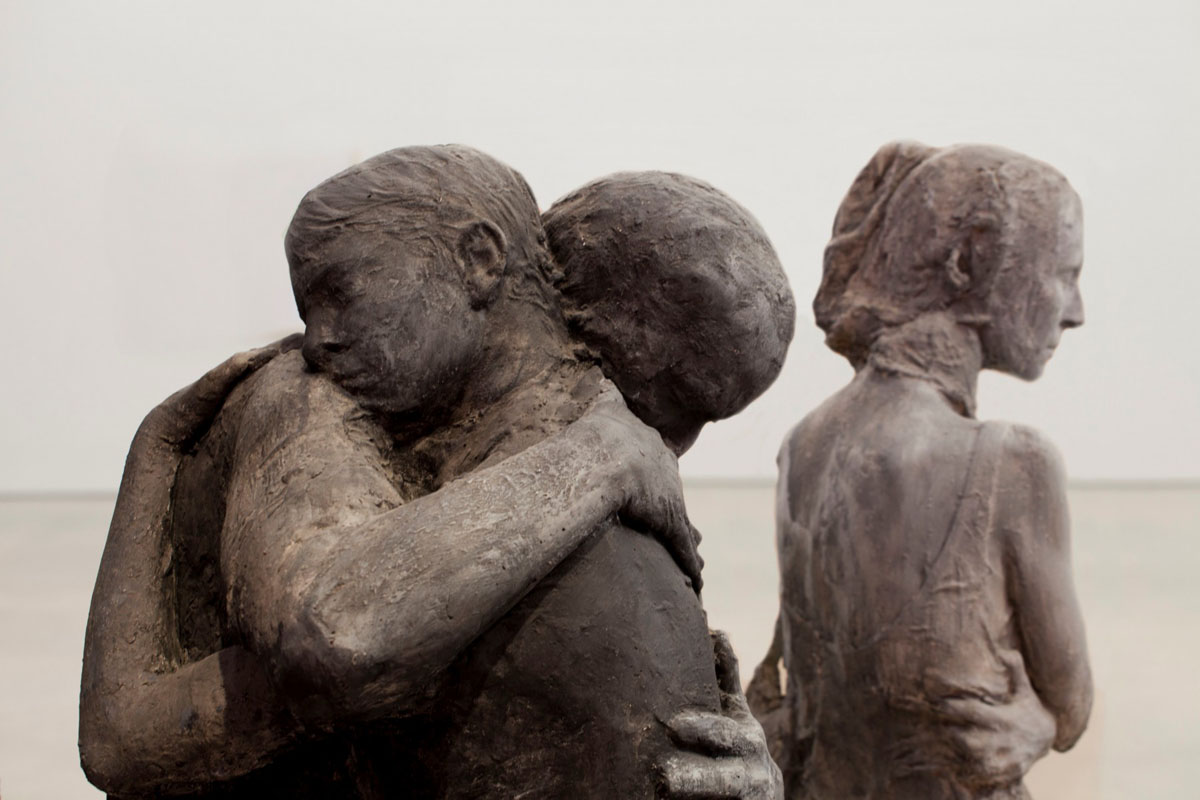
After there was nothing left to drink, she stopped to lay down her son under a bush before walking away, unable to bear watching him slowly die. And she wept, loudly, wailing as one who feels abandoned, even by God.

It’s remarkable that so much is written in the Bible about Hagar, the Egyptian slave, and her son Ishmael.[3] The other woman, Sarah, and their shared husband, Abraham, are the main characters at the beginning of the story of faith in the Book of Genesis. It would have been so easy to cut out the story of Hagar and Ishmael from the pages of the Bible just as Sarah wanted to cut them out of the will. But God wants us to hear their voices in the same way that God heard the cries of Hagar in the wilderness — at the moment Hagar thought she would soon be left to die alone.

God wants them and their story to live.

Whose stories do we set aside, dismiss as unimportant, bury deep in the ground to forget? Many Black Americans, like their parents and grandparents, memorialize what happened 155 years ago about 50 miles from where I’m standing. It took place on June 19, one day after more than 2,000 Federal soldiers had arrived in Galveston. That’s when Major General Gordon Granger read aloud General Order No. 3:

The people of Texas are informed that, in accordance with a proclamation from the Executive of the United States, all slaves are free.[4]

General Granger read those words two and a half years after the Emancipation Proclamation had been issued. And so that date, June 19, became a holiday called Juneteenth. It celebrated the end of slavery within the Confederate states in rebellion. Texas was the most remote of those states and the last refuge of slaveholders who tried to retain what they considered to be their property.

By the time of Juneteenth, somewhere between 50,000 and 150,000 enslaved people had been essentially herded like cattle westward into Texas as slaveholders tried to get beyond the reach of the Union army.[5] As Dr. Caleb McDaniel of Rice University writes in his Pulitzer Prize-winning book Sweet Taste of Liberty:

No one was sure exactly how many came, but it was more than enough to make most of the state’s roadways impassable [as a result of heavy use].[6]

The Mayor of Houston said that before this Juneteenth, before last Friday, two Confederate monuments in our city would be taken down. One of them, honoring Dick Dowling, was located just a short walk down Cambridge Street from Palmer. It was moved there from another location in 1958.

I took both of my children there on Wednesday afternoon as that was happening. I wanted them to see it and to know that Juneteenth wouldn’t be Juneteenth without Dick Dowling, but not in a good way. Enslaved Texans could have been freed two years earlier in the absence of his most famous Confederate victory, the one for which he’s remembered, the reason why there was a statue of him in his uniform.[7]

Because Dowling and his soldiers were all Irishmen, the Roman Catholic Church got to be front and center when his statue, which was the first publicly financed art in the City of Houston, was dedicated on St. Patrick’s Day in 1905. A Catholic priest offered the invocation, and it was a huge community event, with the governor as guest speaker. The governor referred to the President of the Confederacy as:

. . . the grand old man . . . [who had] lived through it all — through pain and through the shame of the shackels.[8]

He was referring to the pain and imprisonment of Jefferson Davis, not the pain of an overseer’s whip that made blood flow or chains that held Black bodies in bondage.

When the other monument, “The Spirit of the Confederacy,” was dedicated three years later in Houston, a different member of the clergy was invited to give the opening prayer. He was introduced by a judge who recalled:

. . . the toil and the hardships of the journey from the valley of humiliation and weakness through darkness and oppression to the heaven-kissed heights of prosperity and power.[9]

Those are interesting words to have chosen to describe past adversity since he was referring to the humiliation and supposed oppression of white people only.

Anyway, he went on to say it was “meet and fit that we should invoke [God’s] blessing upon this assembly and these ceremonies” before inviting the Rev. Peter Gray Sears to do that.[10] The Rev. Mr. Sears was the Rector of Christ Church downtown, but about 20 years later he would become the first Rector of Palmer Memorial Church.

In his prayer, the Rev. Mr. Sears described those who fought in rebellion as having:

. . . [poured] out their heart’s blood in sacramental sacrifice for others who should come after them.[11]

Others would say similar things. One of the speakers embraced the title “rebel” as a rebellion against oppression, calling the war a battle for liberty that was not won but lost. He made no mention of the millions of Black bodies that had been set free.

It’s not just that these statues don’t reflect the values of the whole community today. They never did, even when they were dedicated before cheering crowds, before cheering white crowds. The “our” in speeches given on those civic occasions was never meant to include Black Americans, but it was intended to send a message. After Reconstruction and elections marked by voter intimidation, including threats of physical violence, Black citizens and their political allies were kicked out of office and laws were enacted to disenfranchise them throughout the South.

It’s only after that happened, after the old order had been reestablished in a new form, after Black people had, from the perspective of white supremacy, been put back in their place, that these statues began to appear in front of courthouses and in other public spaces. So I’m grateful they’re now being contextualized.

As a priest, I’m also aware of this truth about myself as a sinful human being: If it had been me instead of one of my predecessors who had been invited to pray over the crowd assembled in front of “The Spirit of the Confederacy,” I would have been there. It’s too easy to pretend otherwise, to imagine that I would have been different, to judge others while self-righteously pardoning myself. But that would be a lie.

Of course, I have no idea what I might have said, especially if my own father had fought in defense of slavery and my childhood had been shaped to remember that in a particular way. I hope I wouldn’t have referred to blood shed as a “sacramental sacrifice for others” unless talking about our Lord Jesus Christ, whose mercy and love embrace the whole world, including Black lives. But I have no doubt that I would have made a racist idol with my words, like Aaron the priest placating the people at Mount Sinai, albeit with poetic subtlety.[12] And I surely do that now, participating in structures that have extended privileges to me time and time and time again.

One of the things that makes the Bible unique in the ancient world is its willingness to look at the underbelly of history, to see things as they really are, not as we wish them to be. The Bible invites us to make a true confession, to lament our sins and the suffering that far too many people endure in this world, not only in past centuries but also now, and to reach out to those whom we’ve hurt. That invitation is extended to everyone from ordinary people of God to the kings of Israel, from the disciples who followed Jesus to you and me, who are trying to follow Jesus too. 

The Bible also reminds us to make room for others, bringing them into wide spaces where they can breathe and where their voices can be heard, just as the Bible itself creates space for the voice of Hagar and the laughter of Ishmael.[13] And I think that’s part of our calling as a church in this time of social unrest and protest.[14] Just as Hagar cried out in the wilderness, a lot of people are crying out for justice today.

They might not be speaking to God. Some might not even believe in God. But surely the God of Hagar, Sarah, and Abraham hears their cry. And if we’re willing, through the power of the Holy Spirit, to help them and their story to live, we might find that one of the persons who is set free and able to breathe in wide spaces is ourself.

AMEN

BACK TO POST Some translations say Ishmael was mocking his half-brother Isaac. Others say he was playing with him. The Hebrew word can also mean laughing.

BACK TO POST Genesis 21:10.

BACK TO POST Genesis 16:1-16, 21:4-21.

BACK TO POST Michael Davis, “National Archives Safeguards Original ‘Juneteenth’ General Order,” National Archives News, June 19, 2020.

BACK TO POST Caleb McDaniel, Sweet Taste of Liberty: A True Story of Slavery and Restitution in America (New York: Oxford University Press, 2019) 148.

BACK TO POST Caleb McDaniel, Sweet Taste of Liberty: A True Story of Slavery and Restitution in America (New York: Oxford University Press, 2019) 148.

BACK TO POST Caleb McDaniel, “Opinion: Houston is right to choose Juneteenth over Dick Dowling Confederate monument,” Houston Chronicle, June 12, 2020.

BACK TO POST Samuel Willis Tucker Lanham, quoted in “Unveiling Ceremonies Were Impressive,” Houston Daily Post, March 18, 1905.

BACK TO POST Norman G. Kittrell, quoted in “Unveiling of Spirit of the Confederacy,” Houston Daily Post, January 20, 1908.

10 BACK TO POST Norman G. Kittrell, quoted in “Unveiling of Spirit of the Confederacy,” Houston Daily Post, January 20, 1908.

11 BACK TO POST Peter Gray Sears, quoted in “Unveiling of Spirit of the Confederacy,” Houston Daily Post, January 20, 1908.

12 BACK TO POST Exodus 32:1-35.

13 BACK TO POST That image of being brought out of a place of constriction and into a broad place where one is able to breathe comes from these words in Psalm 31:

I hate those who cling to worthless idols, *
and I put my trust in the LORD.

I will rejoice and be glad because of your mercy; *
for you have seen my affliction; you know my distress.

You have not shut me up in the power of the enemy; *
you have set my feet in an open place.

14 BACK TO POST The Rev. Christopher L. Epperson, who is the Rector of Bruton Parish Church in Williamsburg, Virginia, wrote a message to his congregation yesterday that explained how the stories of Black Americans have too often been considered less important to the writers of history and included this paragraph:

In the days to come, we will remove the boards from our church windows, which were placed there in the face of real threats. I hope that we, like our beloved church, can lower the armor we use to protect ourselves. I hope the scales will fall from our eyes so we see the suffering and needless injustice around us. I hope we will see how we participate in and perpetuate injustice. I hope we can remove the stuffing from our ears, and hear the stories and experience of our black neighbors.
Unity in Mission Papers and Sermon

9781514741436_p0_v1_s192x300As noted in my introduction to “The Rector’s Report and Unity in Mission,” the Rt. Rev. C. Andrew Doyle, Bishop of the Episcopal Diocese of Texas, recently granted his permission for same-gender marriages to be conducted at Palmer Memorial Episcopal Church in Houston, in accord with his revised Unity in Mission Policy and the paper Unity in Mission: A  Bond of Peace for the Sake of Love. The letters and documents that were sent to him to make that determination have been made available to the congregation and are also linked in the list below:

The Rector’s Letter to the Bishop

The Senior Warden’s Letter to the Bishop

Unity in Mission Task Force Report and Recommendation

Understanding Diverse Perspectives on Same-Gender Marriage

Why People Are Opposed to Gay Marriage

Conversation Guidelines

Brief Summary of Positions on Same-Gender Marriage

Unity in Mission Summary

In the fall of 2013, my previous congregation in a first-ring suburb of Minneapolis was in the midst of a similar conversation. Same-gender marriage had become legal earlier that year in Minnesota, and a pastoral letter from the Rt. Rev. Brian N. Prior, Bishop of the Episcopal Diocese of Minnesota, which included guidelines for his clergy, was written in response to that change in civil law. Most of my parishioners embraced that out of love for our gay and lesbian brothers and sisters in Christ.

Two things that had shaped my own thinking about same-gender marriage by this time were the Rev. Gray Temple’s short and accessible book Gay Unions in the Light of Scripture, Tradition, and Reason and a public discussion in 2012 that I attended at the University of Minnesota between David Blankenhorn and Jonathan Rauch, moderated by On Being’s Krista Tippett, about “The Future of Marriage.” I commend both resources to everyone who desires to strengthen the institution of marriage.

While my congregation reflected on this, I responded to a request for pastoral care from two men in my community of faith who had been in a committed and loving relationship for more than three decades. These faithful Christians hoped to be married on the thirty-third anniversary of their first meeting. So, following the guidelines of the Bishop of Minnesota, I agreed to officiate at their marriage on that anniversary. It took place at a neighboring Episcopal parish since my own parish was honoring and completing the process outlined by our bishop in his letter.

I thought about that a lot the next year, after we had moved to Texas. My wife Carrie and I celebrated our eleventh wedding anniversary on October 11, 2014. The next morning, on Sunday, October 12, the flowers at Palmer Memorial Episcopal Church were given to the glory of God in thanksgiving for the first wedding anniversary of a same-gender couple in my new congregation. Monday, October 13, marked the first wedding anniversary of the two men in Minnesota whose marriage I had blessed.

Acknowledging the fact that there are people whom I know and love deeply who will disagree with me about all of this, I think it’s important for me to share with others the words of my sermon at that wedding more than three years ago in Minnesota. The happy couple have given me permission to do so, for which I am most grateful.

Here’s what I said:
Continue reading

The Rector’s Report and Unity in Mission

Last Sunday was a very important moment in the life of Palmer Memorial Episcopal Church in Houston, Texas. It was the day of our Annual Parish Meeting, which is a time to worship together and reflect on our place in this world as followers of Jesus Christ. As I have stated elsewhere under extremely different circumstances:

Love . . . became the thread that made a connection between all of us. It brought to mind the opening words of a beautiful antiphon that I didn’t quote in my remarks but have contemplated a lot: “Ubi caritas et amor, Deus ibi est,” which means, “Where charity and love are, God is there.”

This I believe. With that in mind, here are the words that I spoke from the pulpit, with information about the celebration and blessing of same-gender marriages, which the Rt. Rev. C. Andrew Doyle, Bishop of the Episcopal Diocese of Texas, has since granted his permission to conduct at Palmer Memorial Episcopal Church:

THE RECTOR’S REPORT

DELIVERED AS THE SERMON ON JANUARY 17, 2016

Today’s sermon is actually my report as the Rector of Palmer Memorial on the day of our Annual Parish Meeting. There comes a time when the new Rector becomes simply the Rector. I think it’s safe to say that at some point over this past year, we crossed that invisible line. To quote the words of Peter to Jesus from the Gospel of Matthew in the stained glass window above Palmer’s altar:

Lord, it is good for us to be here.[1]

Of course, his words were spoken on the Mount of Transfiguration, and those who remember that story will surely remember that Peter and the others didn’t stay there on the mountaintop but went down into the valley and set their faces toward Jerusalem. They have an indescribable experience in the presence of Jesus, a glimpse of divine glory, then walk with Jesus through the world, not as they wish it to be but as it really is. That’s exactly what happens here at Palmer.

In a variety of ways, people encounter beauty in this church — in the building itself, in the art that surrounds us here, in liturgy and music, in friendships with deep roots, in the simple act of receiving together bread and wine made holy food by the promise of Jesus and the power of the Holy Spirit. It’s not a beauty, however, that comes from the perfection either of who we are or of what we bring to offer. To believe that to be true would be a form of idolatry. Whenever perfection becomes an end in itself, especially in the name of God, people are inevitably hurt because human beings, as it turns out, are imperfect 100% of the time.

HFSSAs Lutheran pastor and writer Nadia Bolz-Weber would say about her admittedly quirky congregation in Denver — The House for All Sinners and Saints — community is more important than perfection. Such beauty found together inside these walls, surrounded by crying babies and restless children and doubters and seekers and the unloved and the unloveable and those of us who are simply a mess, is a reflection of the God in whom we believe. We’re able to love one another because God loved us while we were still sinners. Without that love, all the rest of the things we do here are meaningless, “a noisy gong or a clanging cymbal” as Paul would write in his letter to Christians in the City of Corinth.[2]

Just a few minutes ago, we heard other words read to us from Paul in that same letter. Describing a kaleidoscope of spiritual gifts, he assures those disagreeable Corinthians that “it is the same God who activates all of them in everyone. To each is given the manifestation of the Spirit for the common good.”[3] I like what the late Baptist preacher Fred Craddock said about these gifts, which none of us created or possess alone. In a sermon about this passage from First Corinthians, he wrote:

Some years ago someone broke into the church, pried open the door to the room where the vocabulary is kept, and stole one of the richest words the Christian community possessed. The word was charisma. It was peddled on the street and soon came to be used by everybody for everything: an exciting personality, a particular hairstyle, photogenic face, stimulating speech, provocative style of leadership. The word is a form of charis, grace, from which we get eucharist, and is the background word for charity. Charisma is a gift, and it is Paul’s insistence that when we talk of these matters, we call them what they are — gifts of God. Apart from that association with God and grace, we might as well be discussing magic and horoscopes.

And the word for Paul is plural, charismata; there are varieties of gifts. By its repetition it can be assumed that diversity of gifts is Paul’s insistence.[4]

In other words, we need one another, not in spite of but because of all of our God-given differences. Only together are we a community that can be called the Body of Christ. That image of the human body, with its many and varied parts, is the metaphor Paul will use next in his letter, reminding the Corinthians and us that “we were all baptized into one body” and that “the eye cannot say to the hand, ‘I have no need of you,” nor again the head to the feet, ‘I have no need of you.’”[5] That’s easier said than done, of course, in the cultural landscape that surrounds us. But we belong to another kingdom, a heavenly country where God’s love reigns eternally.

Palmer is where we learn the grammar of that love, practicing it imperfectly and making mistakes, receiving not only forgiveness but also renewed strength for the journey. Over the past year, others have joined us on this pilgrimage. Indeed, the very word Palmer has referred historically to someone who had returned from the Holy Land with a palm frond or leaf as a sign of having undertaken a pilgrimage. Two of those new Palmers who are walking beside us are new faces on our church staff — the Rev. Alex Easley, our Curate, and Roger Hutchison, our Director of Christian Formation and Parish Life.

Alex EasleyAlex was appointed by Bishop Andy Doyle of the Episcopal Diocese of Texas to serve our congregation as a curate for a period of two years. Last summer she was ordained as a transitional deacon at Christ Church Cathedral. Since then, many of you have gotten to know Alex through her work here in the areas of pastoral care, outreach, young adults, and youth. God willing, this Wednesday, January 20, Alex will be ordained to the priesthood at Palmer by Bishop Doyle. And you are all invited to that ordination service, which will begin at 6:30 p.m. and be followed by a festive reception.

Roger HutchisonRoger I’ve known for nearly 20 years. He came to Palmer after serving for 17 years on the staff of Trinity Cathedral in Columbia, South Carolina. As most of you know, Roger shapes Christian faith in the lives of young people and adults not only through stories and conversations but also through art. He’s the author of The Painting Table: A Journal of Loss and Joy and of another recently published book called Under the Fig Tree: Visual Prayers and Poems for Lent.

A week from this Wednesday, January 27, Roger and I will begin leading an evening series called Painting the Psalms. We’ll take a look at a selection of psalms, with me focusing on the poetry and theology while Roger leads us in an artistic response to that. More details about all of that will be forthcoming, and I hope you’ll join us.

The Painting Table

This past year a group of Palmers, including me, were invited to a friendship dinner during Ramadan at the Turquoise Center in Houston to learn about the Turkish culture and Muslim faith of their members. We returned the favor, something that, quite frankly, doesn’t often  happen, inviting them to a presentation in our church about our Christian faith. I talked with them about how that faith affects the way we look at the world after we are sent out from here in the name of Christ.

This past year, as they have done so before, a lot of folks from our congregation also supported the work of an organization called Kids4Peace. It brings together Jewish, Christian, and Muslim youth from the Holy Land for a summer camp experience in various locations throughout the United States, including Camp Allen, which is the camp and conference center for the Episcopal Diocese of Texas. Palmer’s own Stuart Kensinger is a member of our Vestry and a major supporter of Kids4Peace. As Stuart will tell you, participating in these kinds of interfaith conversations does not dilute one’s Christian identity but rather deepens it and brings it into focus. You have to bring your whole self to the table and be clear about who you are as a follower of Jesus Christ. And you can do that while building friendships across the boundaries of your own faith as a Christian. I think Palmers can be role models for this.

Kids4Peace

In fact, you can practice this today. Joining us at this service are Jewish, Christian, and Muslim participants in an interfaith program called Building Abrahamic Partnerships. This series of classes, led by Professor Yehezkel Landau of Hartford Seminary, began last Tuesday at the Turquoise Center and concludes this afternoon here at Palmer with a meal together and a final discussion in St. Bede’s Chapel.

As most of you probably know, welcoming refugees and helping them resettle in the City of Houston has long been a part of the work of this congregation. Last spring, Palmer completed the more than one year co-sponsorship of the resettlement of an Eritrean mother and child. Soon we will begin the co-sponsorship of a refugee family from the Congo. You’ll have the opportunity, as always, to share in this important ministry. So look for announcements that invite you to become involved in this holy work in the weeks and months ahead.

That begins today, in fact, for the children and youth who will gather in Holy Cross Chapel during our Annual Parish Meeting. They will be decorating fabric squares that will be made into a quilt and presented as a gift to a refugee family.

Decorated Quilt Squares

Last but not least, most of you will recall that I announced in my report last year that I would appoint members to three task forces to look at three important areas of our life together. The first was a Youth Task Force, led by our Junior Warden, Courtney Daniell-Knapp, which facilitated a diocesan assessment of our youth programs. The members of this task force are continuing to support Roger Hutchison in his first year of ministry at Palmer, and they are also working together with Roger to define the best leadership model for our youth programs going forward.

The second was a Mission-Beyond-Our-Walls or Outreach Task Force, led by Bill Kersten, which has been studying and reflecting on the numerous opportunities that we have as a church to connect with the neighborhoods that surround us. The continuing work of this task force is especially important because of the transition that happened at the end of the summer with the closing of the Way Station, our outreach to the homeless for more than 24 years, which included serving breakfast on this campus to our clients during the workweek. We are now working in partnership with the Star of Hope Mission, which has supported the homeless with transformational programs for more than a century in the City of Houston.

Star of Hope Mission

You can expect to receive a survey from this task force in the near future. You will also be invited to participate in something that I’m very excited about this spring — a day of service when Palmers worship together at a service like this in the Season of Easter before being sent to be the church out in the community. There will be all sorts of opportunities that you can sign up for beforehand from serving meals to the homeless to singing for the residents of nursing homes, making cakes for families in shelters, or perhaps going with a eucharistic visitor to bring communion to someone who can’t be with us here. Folks, of course, will also be able to choose to participate in an activity even if they didn’t sign up beforehand.

I’m really excited to see what might happen that afternoon. All of these kinds of things are about overcoming estrangement and isolation and are, therefore, a reflection of the reconciliation that the gospel brings to a broken world.

9781514741436_p0_v1_s192x300The third group that I appointed was a Unity in Mission Task Force. Unity in Mission: A  Bond of Peace for the Sake of Love is the name of a paper that was written by Bishop Andy Doyle and includes opening remarks by former Secretary of State James Baker III. First published in 2012 to address the pastoral and theological issue of the blessing of same-gender relationships, it was revised in 2015 to address the blessing of same-gender marriages.

Palmer’s Unity in Mission Task Force, led by John Wallace, also included Jeanine Baker, Debbie Brassfield, Hal Gordon, Matt Kent, Allison Marek, Elizabeth Maynard, and Patrick Sermas. These sisters and brothers in Christ were asked to follow the guidelines set forth by Bishop Doyle in his revised Unity in Mission Policy for congregations that are considering the blessing of same-gender marriages.

The Unity in Mission Task Force spent the last six months in discernment together, studying materials with a variety of perspectives on the nature of marriage, receiving feedback from parishioners both as individuals and in small group discussions, creating helpful resources to share with the congregation, and praying with one another. That process convinced the members of the task force of three things that are noted in their report: “Reasonable people can hold differing good-faith views about this issue; this is not an ultimate issue; and no matter where an individual Palmer stands on this issue, we can move forward together in the bonds of grace, love, and mercy.”

That report continues with a unanimous recommendation:

. . . to the Rector and Vestry that Palmer embrace the celebration of same-gender marriages.

Last Thursday, I presented that report and recommendation to the members of the Vestry. What followed was a thoughtful discussion about what this would mean for Palmer, the importance of caring for everyone who sits in these pews, including those who disagree with us, and whether the Vestry should vote to affirm this, even though the guidelines from Bishop Doyle only require that the Vestry intend to support the Rector in the implementation of these liturgies. After that important discussion, Palmer’s Vestry did vote to affirm the task force’s recommendation.

Last Friday, as required in his revised Unity in Mission Policy, Bishop Doyle received separate letters about all of this from me as the Rector and from Tim Driggers as our Senior Warden. He also received copies of the report from the task force and of the resources that were created to supplement it. The decision to move forward with this will not become official until Bishop Doyle has approved it.

Those letters, the report of the task force, and its accompanying resources will be made available electronically on the church website this week and in printed copies both in the church office this week and after worship services next Sunday. When those documents become available to you, I strongly encourage you to read them in their entirety. I’ll later suggest additional materials that may also be helpful to you.

As I stated to you last year, your priests have been called to care for everyone in this community of faith in the name of Christ, including our gay and lesbian brothers and sisters. Pending the Bishop’s approval, that statement of mine can now be further clarified to include responding pastorally within the walls of this church to same-gender couples that desire boundaries of publicly declared faithfulness in marriage. I can assure you that it also embraces those who disagree with this. I want to state that clearly this morning. We will care for everyone in the name of Christ.

It seems obvious to me that our community here at Palmer cares deeply about the institution of marriage, that we genuinely desire to support one another in the commitments that healthy relationships require, and that we are willing to love those who sit beside us in the pews as sisters and brothers in Christ. I was pleased, therefore, by the additional recommendation of the task force “that Palmer create a system for strengthening and supporting marriages.” As the report goes on to state:

Marriage itself, as a secular institution and as a spiritual sacrament, is losing ground. It behooves all of us who believe in the fidelity of relationships — as icons of God’s fidelity in relationship with us and as laboratories for human growth in love — to support each other in that daily walk.

To that, I say, “Amen, amen, and amen.”

I believe the spiritual gifts needed to provide that strength and support are already here, not because we are perfect, but because we are present to each other in a community that seeks, in the words of our mission statement, “to know and share the love of Jesus Christ.” It is in Christ that we find our unity, that everyone in our church family is loved, and that our community of faith will truly become, in the words of the Prophet Isaiah, “a house of prayer for all people.”[6]

One of the hallmarks of our congregation has been the ability to disagree openly, lovingly, and vigorously about all sorts of things, while still holding hands, so to speak, around the Lord’s Table. That’s a gift we can share joyfully with the whole world, as we come together to “worship the Lord in the beauty of holiness” today.[7]

AMEN

BACK TO POST Matthew 17:14.

BACK TO POST I Corinthians 13:1.

BACK TO POST I Corinthians 12:6-7.

BACK TO POST Fred B. Craddock, “From Exegesis to Sermon: 1 Corinthians 12:4-6,” Review and Expositor, volume 80, number 3 (Summer 1983) 423.

BACK TO POST I Corinthians 12:13, 21.

BACK TO POST Isaiah 56:7, as phrased in Noah Webster’s 1833 limited revision of the King James Version of the Bible.

BACK TO POST Psalm 29:2 (1979 Book of Common Prayer translation).